Thursday, October 8, 6:30 PM – 7:30 PM
Stavros Niarchos Fundation Library | New York Public Library
7th Floor Event Center
455 Fifth Avenue
New York, NY 10016
Free and open to the public
REGISTER
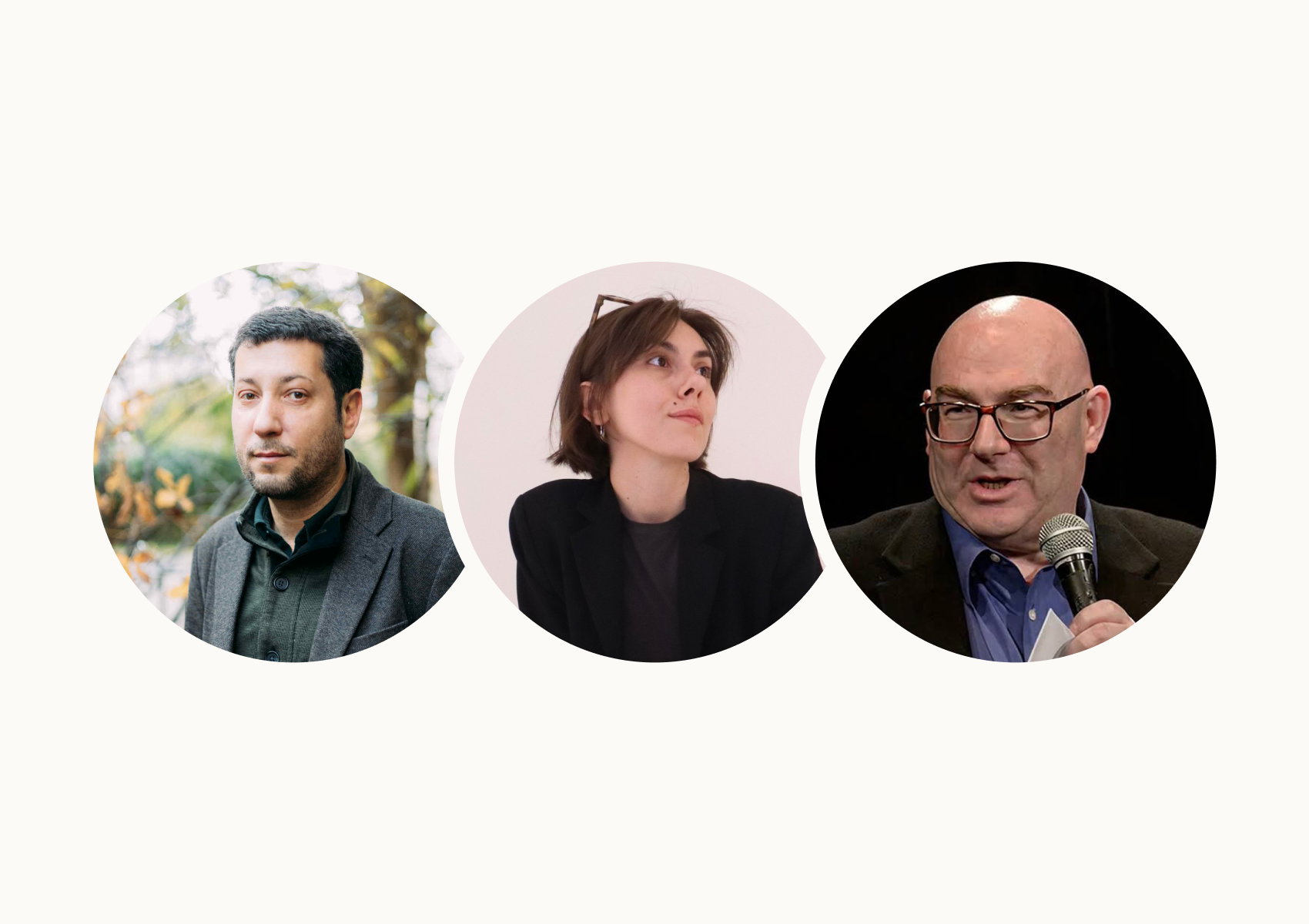
For Banned Books Week, Yasha Klots, Mark Lipovetsky, and Valeriia K. of the Tamizdat Project join us to shed light on smuggled literature that defied Soviet censorship and illuminates the enduring power of the printed word.
Throughout the Soviet century, tamizdat (literally, “published over there,” or abroad) comprised manuscripts rejected, censored, or never submitted for publication at home but smuggled through various channels across the Iron Curtain and printed elsewhere, with or without their authors’ knowledge or consent. Until perestroika, when the curtain began to rust, these books were used as weapons on the cultural fronts of the Cold War.
In this talk, Yasha Klots will speak about the history of tamizdat as a literary practice and political institution from the Cold War era to the present, when censorship and political repressions in Russia and Belarus have forced an increasing number of authors, publishers, and readers into exile, especially after the full-scale invasion of Ukraine in 2022. He will also speak about the Tamizdat Project, a public scholarship initiative for the study of banned books from the former USSR and Easter Europe, as well as a small press and a philanthropic organization.
To join the event in person | Doors will open 30 minutes before the program begins. For free events, we generally overbook to ensure a full house. Priority will be given to those who have registered in advance, but registration does not guarantee admission. All registered seats are released shortly before start time, and seats may become available at that time. A standby line will form 30 minutes before the program.
Yasha Klots (Ph.D., Yale) is Associate Professor of Russian and Comparative Literature at Hunter College and CUNY Graduate Center. His research is focused on book history, Russian and East European émigré literatures and cultures, urbanism and literary representation of cityscapes, multilingualism and translation, and Gulag narratives. He is the author of Joseph Brodsky in Lithuania (St. Petersburg: Perlov Design Center; in Russian), Poets in New York: On City, Language, Diaspora (Moscow: NLO, 2016; in Russian), Tamizdat: Contraband Russian Literature in the Cold War Era (Cornell, 2023; NLO 2024). He is also a co-translator of Tamara Petkevich’s Memoir of a Gulag Actress (Northern Illinois UP, 2010). In 2022, he co-founded Tamizdat Project, a public scholarship initiative and a nonprofit organization for the study of banned books from the Cold War to the present, which is also a small press specializing in books on exile and cultural displacement.
Mark Lipovetsky is a professor of Department of Slavic Languages at Columbia University. His research interests include Russian postmodernism, New Drama, Soviet literary and cinematic tricksters, Soviet underground culture as well as various aspects of post-Soviet culture. He is the author of twelve monographs and two hundred articles. He is one of coauthors of the Oxford history of Russian literature (2018). In 2022, Lipovetsky published a monograph A Guerilla Logos: The Project of Dmitry Aleksandrovich Prigov (co-authored with Ilya Kukulin); he also curated the publication of Prigov’s five-volume collected works at NLO Press in Moscow. He also co-edited twenty collections of articles on Russian literature and culture of the 20th-21st centuries, including volumes on Dmitry Prigov, Vladimir Sorokin, Vladimir Sharov, and the Oxford Handbook of Soviet Underground Culture (2024). Lipovetsky is a recipient of the American Association of Teachers of Slavic and East European Languages award for the outstanding contribution to scholarship (2014) and Andrey Belyi Prize (2019). At Columbia University, Lipovetsky runs the Contemporary Culture Series that includes talks, conversations and symposia on most significant aspects of contemporary Russophone culture.
Valeriia K. is a Digital Humanities and data specialist at Stanford University Libraries, where she focuses on digital preservation and accessibility of cultural collections. She develops the Vsesvit: Digital Archive, a project dedicated to the oldest Ukrainian journal of translated world literature. She is a data specialist at the Tamizdat Project, contributing to a digital archive of banned books and unofficial publications from the Cold War to the present. Her work spans the full data lifecycle — from collection and curation to analysis — applying computational methods to humanities research.