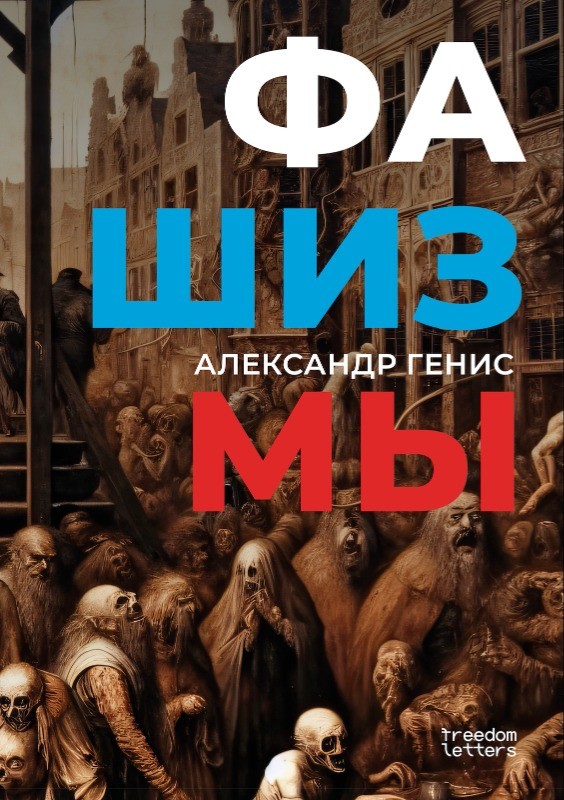
Чтобы понять, а не покорно принять происходящее, нужно и можно его вставить в контекст. История — не склад аналогий, а их музей. Собравшись вместе, они преподают урок будущему, вскрывая настоящее. Книга Александра Гениса, автора интеллектуальных бестселлеров («Довлатов и окрестности», «Камасутра книжника», «Персоналии: среди современников») — коллекция этюдов. Девять глав с монтажом цитат, лирическими и мемуарными вкраплениями описывают тоталитарные режимы разных стран — от Австрии и Германии до Италии, Испании, Японии и ГДР. Книгу завершает эссе об эзоповом языке отечественной культуры, где война стала универсальной метафорой.
To understand what is happening, rather than meekly accept it, one must — and can — put it in context. History is not a warehouse of analogies but a museum of them. Gathered together, they teach a lesson to the future by laying bare the present. This book by Aleksandr Genis, author of intellectual bestsellers (“Dovlatov and Environs,” “A Bookworm’s Kama Sutra,” “Personalia: Among Contemporaries”), is a collection of études. Nine chapters, with a montage of quotations and lyrical and memoir passages, describe the totalitarian regimes of different countries — from Austria and Germany to Italy, Spain, Japan and the GDR. The book closes with an essay on the Aesopian language of Russian culture, in which war has become a universal metaphor.