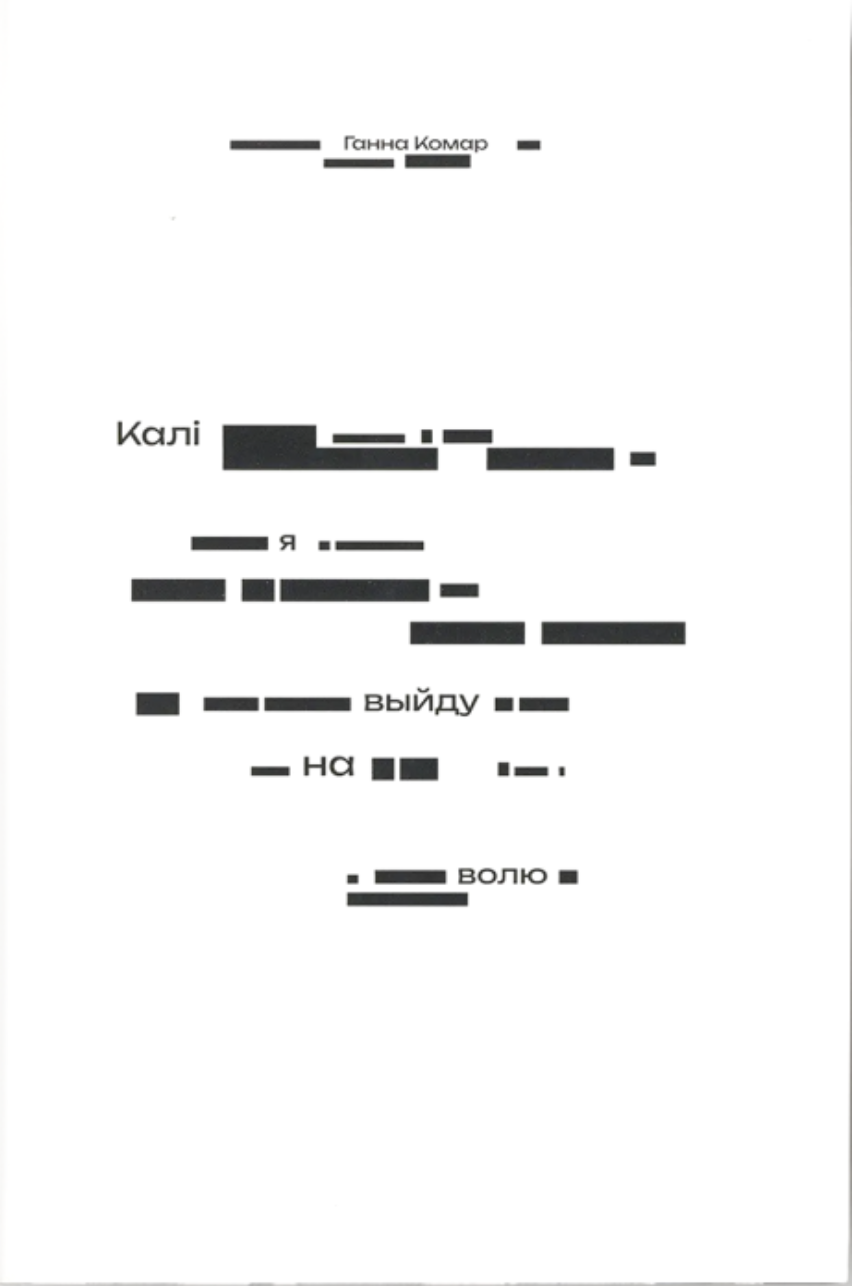
Кніга дакументальнай прозы «Калі я выйду на волю» апісвае дзевяць дзён, якія Ганна Комар прабыла ў зняволенні ў 2020-м. Гісторыя раскрываецца праз дзённікавыя запісы самой аўтаркі і аповеды тых, хто пражывалі міліцэйскі гвалт, арышт і зняволенне ў той самы час, і блізкіх людзей, якія падтрымлівалі іх у тыя дні.
У гэтай кнізе вы, верагодна, пазнаеце сябе, нават калі не распавядалі аўтарцы сваю гісторыю. У кнізе шмат падтрымкі і салідарнасці, у ёй цеплыня і гумар. «Гэта кніга — напамін пра найлепшых нас, смелых і аб’яднаных высокімі ідэямі. Мы такімі былі — і мы такімі застаёмся», — піша Г. Комар у эпілогу.
У кнігі — незвычайны дызайн. Гісторыі, расказаныя іншымі, перададзеныя ў кнізе амаль без знакаў прыпынку, а на месцы паўз —доўгія прабелы, якія перадаюць асаблівасці маўлення, глыбокі эмацыйны досвед. Паколькі тэкст насычаны інтэнсіўнымі перажываннямі, дызайн кнігі стварае шмат паветра, каб чытач ці чытачка пачуваліся вольна, каб даць адчуванне бяспекі і клопату.
The documentary prose book Kali ja vyjdu na voliu describes the nine days Hanna Komar spent in detention in 2020. The story unfolds through the author’s own diary entries and the accounts of those who lived through police violence, arrest and imprisonment at the same time, as well as of the loved ones who supported them in those days.
You will probably recognize yourself in this book, even if you did not tell the author your story. The book is full of support and solidarity, warmth and humor. “This book is a reminder of the best of us, brave and united by high ideals. That is who we were — and that is who we remain,” H. Komar writes in the epilogue.
The book has an unusual design. The stories told by others are rendered almost without punctuation, and in place of pauses there are long spaces that convey the particularities of speech and deep emotional experience. Since the text is saturated with intense experiences, the book’s design creates a lot of air, so that the reader can feel free, and to give a sense of safety and care.