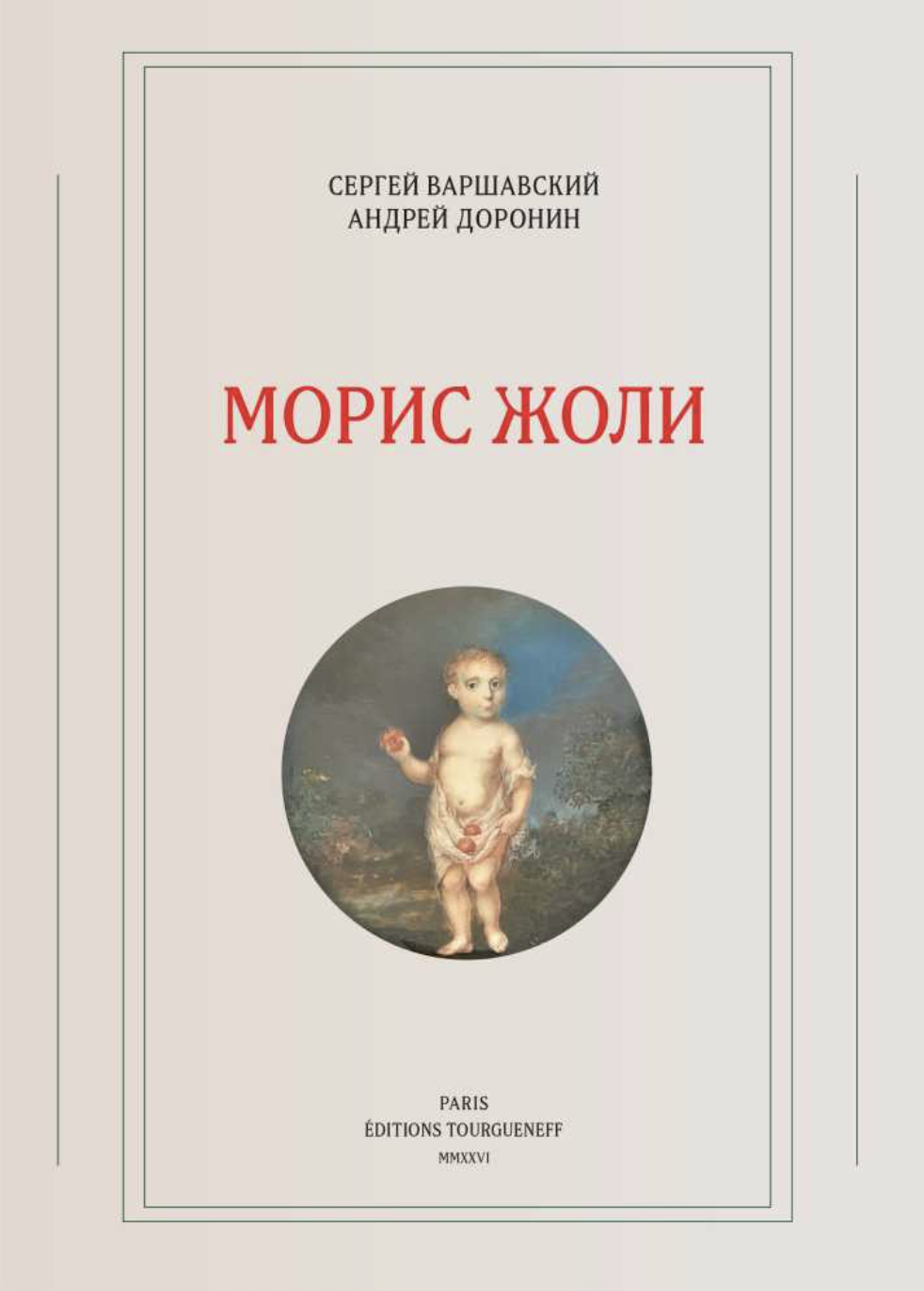
Эта книга — не только биография человека, опередившего свое время. Это рассказ о Париже, о Второй империи, о бароне Османе, о крахе при Седане, о Парижской Коммуне, о рождении Третьей республики. О том, как демократия превращается в диктатуру, если этому не препятствовать.
От авторов
Биография Мориса Жоли важна для нас в первую очередь потому, что он оказался провидцем. В своей книге «Разговоры Макиавелли и Монтескье в царстве мертвых» Жоли, устами великого флорентийца, излагает подробный план превращения либерального государства в диктатуру.
В середине XIX века наш герой чудесным образом заглянул в будущее и описал то, что в 1930-х годах предпринял Гитлер в Германии, а в 2000-х — Путин в России. Описал в точности, подробно, шаг за шагом. Однако, раскрыв технологию приготовления яда, Жоли дал нам и противоядие. Воспользуются ли им следующие поколения? Сумеют ли защитить демократию, позволят ли следующему диктатору творить свое грязное дело, превращая целый народ в стадо рабов?
К чему стадам дары свободы?
Их должно резать или стричь.
Наследство их из рода в роды
Ярмо с гремушками да бич.
А. С. Пушкин
От издательства
«Жизнь и приключения Мориса Жоли, парижского адвоката» — так называлась эта книга до вмешательства редактора. И правда, перед читателем вовсе не сухое академическое исследование, как можно было бы подумать, глядя на толстенный том с примечаниями, алфавитным указателем и библиографией. «Морис Жоли» — это мистификация и политический памфлет.
Почти все действующие лица этой книги (кроме двоих, и читатель должен догадаться, кто эти двое) — реальные люди. Они живут в Париже середины XIX века, в эпоху, когда монархия сменяется республикой, республика — империей, империя — коммуной, а коммуна — вуаля! — вновь оборачивается республикой. Мрачный город «Агасфера» Эжена Сю исчезает, и на его месте появляется Город Света, «Праздник, который всегда с тобой», столица Модерна с большой буквы.
В этом городе действуют монархисты и республиканцы, бонапартисты и либералы, журналисты и адвокаты, издатели и литераторы, рестораторы, гризетки, лоретки, террористы, авантюристы и преступники. Все они — прямо или косвенно — связаны с судьбой Мориса Жоли. История Франции, Европы и Парижа кипит вокруг нашего героя: в парламентских палатах и редакциях газет, в судебных залах и тюремных камерах, на улицах, баррикадах и избирательных участках, в кабинетах префектуры полиции и у подножия гильотины.
В погоне за славой Морис пытается сделать карьеру адвоката, издает газету, пишет книги, вступает в политическую борьбу, ищет славы, признания и власти. Но всякий раз на его пути возникают препятствия — иногда враги, иногда друзья, иногда дурацкие обстоятельства, а порой — собственная совесть. Или, напротив, ее отсутствие… В конце концов одно из этих препятствий оказывается непреодолимым...
Слава все же приходит к нашему герою, но спустя много лет после его смерти и весьма странным образом. Какова была жизнь человека, создавшего «Разговоры Макиавелли и Монтескье в царстве мертвых» — литературное произведение со столь необычной судьбой? Вы узнаете об этом, прочитав книгу Варшавского и Доронина «Морис Жоли».
This book is not only the biography of a man ahead of his time. It is also a story of Paris, the Second Empire, Baron Haussmann, the defeat at Sedan, the Paris Commune, and the birth of the Third Republic. It is a story of how democracy can turn into dictatorship if left unchecked.
From the Authors
The biography of Maurice Joly matters to us above all because he was a visionary. In his book Dialogue in Hell Between Machiavelli and Montesquieu, Joly, speaking through the voice of the great Florentine, sets out a detailed plan for turning a liberal state into a dictatorship.
In the mid-nineteenth century, our hero seemed miraculously to peer into the future and describe what Hitler would undertake in Germany in the 1930s, and Putin in Russia in the 2000s. He described it precisely, in detail, step by step. Yet by revealing the technique for preparing the poison, Joly also gave us the antidote. Will future generations make use of it? Will they be able to defend democracy, or will they allow the next dictator to do his dirty work, turning an entire people into a herd of slaves?
Why do herds need the gifts of freedom?
They should be slaughtered or shorn.
Their inheritance, from age to age:
a yoke with jingles and the whip.
A. S. Pushkin
From the Publisher
The Life and Adventures of Maurice Joly, Parisian Lawyer — that was the title of this book before the editor intervened. And indeed, what the reader encounters here is not a dry academic study, as one might assume from a hefty volume with notes, an alphabetical index, and a bibliography. Maurice Joly is a literary mystification and a political pamphlet.
Almost all the characters in this book — with two exceptions, and the reader must guess who those two are — are real people. They live in mid-nineteenth-century Paris, in an age when monarchy gives way to republic, republic to empire, empire to commune, and the commune — voilà! — turns back into a republic. The dark city of Eugène Sue’s Ahasuerus disappears, and in its place arises the City of Light, “a moveable feast,” the capital of Modernity with a capital M.
In this city act monarchists and republicans, Bonapartists and liberals, journalists and lawyers, publishers and writers, restaurateurs, grisettes, lorettes, terrorists, adventurers, and criminals. All of them — directly or indirectly — are connected with the fate of Maurice Joly. The history of France, Europe, and Paris seethes around our hero: in parliamentary chambers and newspaper offices, in courtrooms and prison cells, in the streets, on barricades and at polling stations, in the offices of the police prefecture and at the foot of the guillotine.
In pursuit of glory, Maurice tries to build a career as a lawyer, publishes a newspaper, writes books, enters political struggle, and seeks fame, recognition, and power. But each time obstacles arise in his path — sometimes enemies, sometimes friends, sometimes absurd circumstances, and sometimes his own conscience. Or, on the contrary, its absence… In the end, one of these obstacles proves insurmountable...
Glory does come to our hero after all, but many years after his death and in a very strange way. What was the life of the man who created Dialogue in Hell Between Machiavelli and Montesquieu — a literary work with such an extraordinary fate? You will discover it by reading Varshavsky and Doronin’s Maurice Joly.