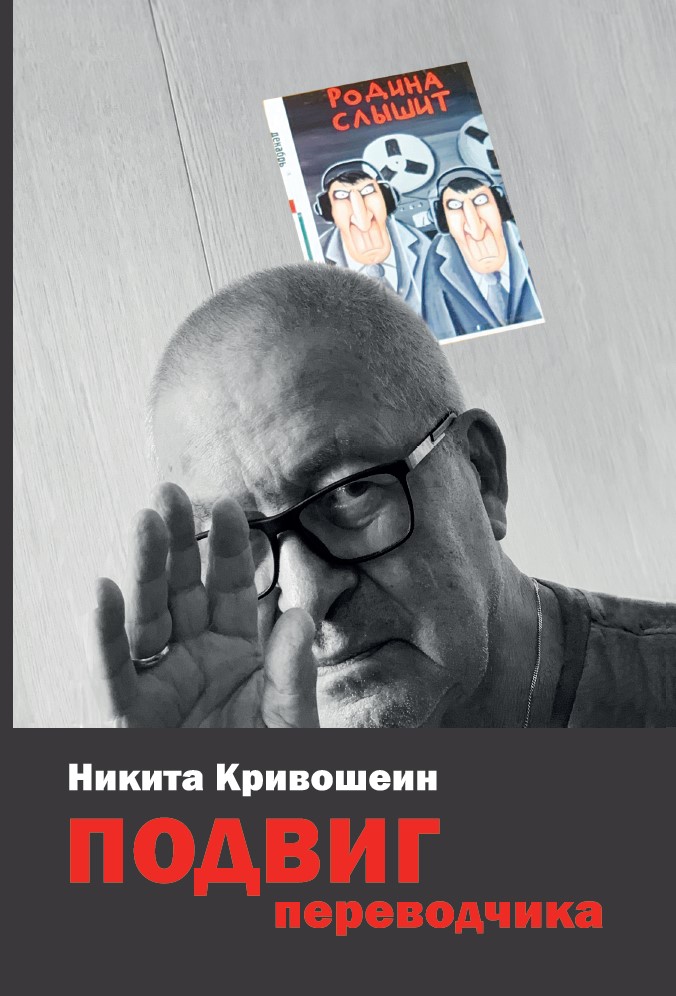
"Если бы жизнь Никиты Кривошеина не была столь невероятным, почти голливудским приключением, ее, по известной присказке, стоило бы выдумать — в назидание потомкам и в разрушение шаблонов." Иван Никитич Толстой, известный русский историк и журналист
Книга воспоминаний Никиты Игоревича Кривошеина это долг памяти прожитых автором десятилетий: Франция - СССР - Франция. Это мужественное свидетельство, которое современная пропаганда в России вычеркивает из памяти и подвергает цензуре. Испытания и крутые повороты судьбы автора, взгляд русского европейца на события ХХ и XXI-го века, в котором пребывает мир после 24 февраля 2022 года - увлекательны и полезны.
Его необычный жизненный путь: внук А.В. Кривошеина, прогрессивного министра земледелия царской России, сын героя французского Сопротивления И.А. Кривошеина, Никита Игоревич родился в 1934 году во Франции. В 1947 году подростком он оказывается в Ульяновске. Его отец, получивший во Франции образование инженера, под воздействием сталинской кампании «За возвращение на родину» (обещанное прощение эмигрантам их «отступничества», призыв служения на благо родине), берет советский паспорт и уезжает в Россию. Вскоре за ним следует его семья – жена Нина Алексеевна и сын Никита. Чем для репатриантов обернулось их возвращение на родину, вскоре стало известно: одних ждал ГУЛАГ, других – поселение в места отдаленные, работа по принуждению… Всего уехало около трех тысяч человек. Было бы и больше, если бы уехавшие не постарались предупредить оставшихся, какая им там уготована «дружеская» встреча. В 1970 году, в период хрущевской оттепели, Никита Кривошеин, к тому времени один из блестящих синхронных переводчиков, возвращается в родной Париж. Новая книга Кривошеина охватывает все этапы его жизни на земле отцов, последующий свободный период, и доводит нас до событий сегодняшних дней.
“If Nikita Krivoshein’s life had not been such an incredible, almost Hollywood adventure, it would, as the saying goes, have been worth inventing — as a lesson to posterity and to break the stereotypes.” Ivan Nikitich Tolstoy, well-known Russian historian and journalist
Nikita Igorevich Krivoshein’s memoir is a debt to the memory of the decades he has lived: France – USSR – France. It is a courageous testimony that present-day propaganda in Russia erases from memory and censors. The author’s trials and the sharp turns of his fate, and the view of a Russian European on the events of the twentieth and twenty-first centuries, in which the world has found itself after February 24, 2022, make for fascinating and useful reading.
His unusual life path: the grandson of A. V. Krivoshein, the progressive Minister of Agriculture of tsarist Russia, and son of the French Resistance hero I. A. Krivoshein, Nikita Igorevich was born in France in 1934. In 1947, as a teenager, he found himself in Ulyanovsk. His father, who had trained as an engineer in France, was swayed by Stalin’s “Return to the Homeland” campaign (which promised émigrés forgiveness for their “apostasy” and called on them to serve the good of the motherland); he took a Soviet passport and left for Russia. His family — his wife Nina Alekseevna and son Nikita — soon followed. What the return to the homeland meant for the repatriates soon became clear: some were sent to the Gulag, others to settlements in remote places and forced labor… Some three thousand people left in all. There would have been more if those who had gone had not tried to warn those who stayed behind about the “friendly” welcome awaiting them. In 1970, during the Khrushchev Thaw, Nikita Krivoshein, by then one of the most brilliant simultaneous interpreters, returned to his native Paris. Krivoshein’s new book covers every stage of his life in the land of his fathers and the free period that followed, and brings us up to the events of today.