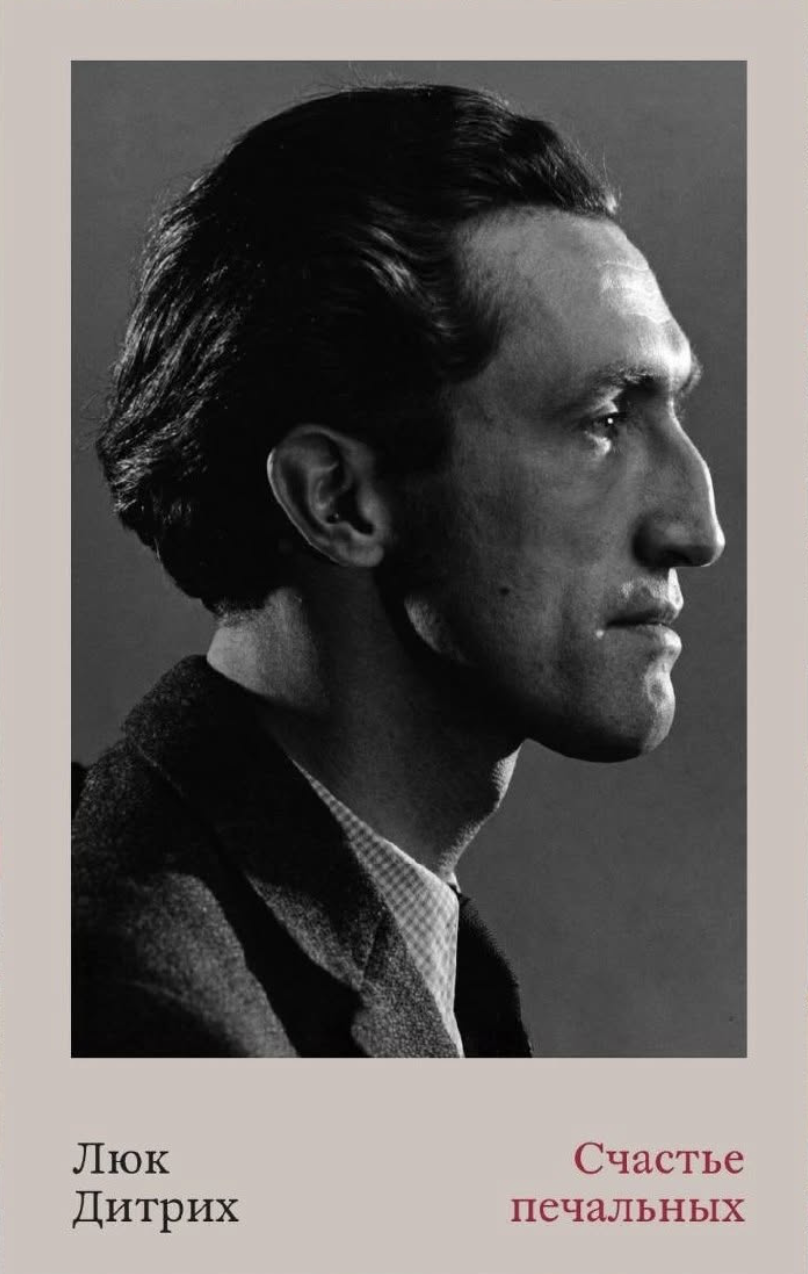
Счастье печальных
«Счастье печальных» — великая книга, голос звучит в ней особенный, и эхо его разносится далеко, и сама форма этой книги прекрасна. И не важно, насколько автор был искренен, но я могу поклясться, что книга его — правдива. И не важно, воссоздает ли себя Люк Дитрих или придумывает заново, такой ли он на самом деле или же не такой, пытается ли он чему-то научиться или учит сам! Голосу его я верю беспрекословно!
Поль Элюар
Я знал с уверенностью лишь о двух вещах — и только потому, что видел их собственными глазами, — о цветах и звездах. Я взял как-то горшок и посадил в нем герань стеблями вниз, а корнями наружу. Но цветы, воспротивившись, изогнулись и выпростали головки еще выше корней.
Цветы тянутся к звездам, потому что звезды дают им напиться. Звезды можно увидеть в колодце, однако же они сами словно колодцы, резервуары, бассейны, из которых нисходит на землю роса и льются дожди.
Люк Дитрих
Le bonheur des tristes
Le bonheur des tristes (Shastie pechalnych) is a great book; the voice that speaks in it is unlike any other, its echo carries far, and the very form of the book is beautiful. It hardly matters how sincere the author was — I can swear that his book is truthful. It hardly matters whether Luc Dietrich is recreating himself or inventing himself anew, whether he is really like this or not, whether he is trying to learn something or teaching it himself. I believe his voice without question.
Paul Éluard
There were only two things I knew for certain, and only because I had seen them with my own eyes: flowers and stars. I once took a pot and planted a geranium in it stems down and roots up. But the flowers resisted, bent around, and pushed their heads out even higher than the roots.
Flowers reach for the stars because the stars give them drink. You can see stars in a well, and yet they are themselves like wells, reservoirs, pools from which dew descends to the earth and rains pour down.
Luc Dietrich