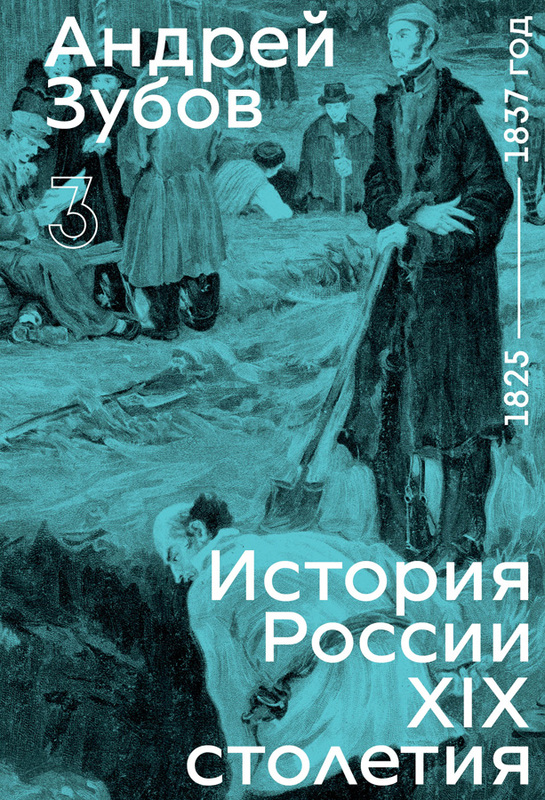
«История России XIX столетия» доктора исторических наук, профессора Андрея Борисовича Зубова — не хронологический пересказ событий, а размышление над причинами, которые приближали возможность гибели «исторической России». Катастрофа начала XX века, считает профессор Зубов, имеет намного более глубокие корни, чем принято думать. Внимательное изучение этих причин помогает не только лучше понять прошлое, но и объяснить настоящее.
Третий том посвящён первому периоду царствования Николая Павловича. Натура «рыцаря Николая», как его звали в детстве, «Дон-Кихота самодержавия», как называли потом, настоялась на идеях абсолютного консерватизма его наставников, историка Николая Карамзина и генерала Матиаса Ламбздорфа: человек — малозначим, государство — самоценно. Неумелая, но притом пафосная внешняя политика была оплачена известной ценой — ценой крови русского солдата, технические прорывы — ценой мучений и бедствий простого человека. К середине царствования Николая I за внешним блеском Двора и мощью миллионной армии проницательные наблюдатели всё яснее видели застой и упадок огромной страны, закованной в кандалы рабства.
Istoria Rossii XIX stoletiia by Andrei Borisovich Zubov, Doctor of Historical Sciences and professor, is not a chronological retelling of events but a reflection on the causes that brought the possible destruction of “historical Russia” ever closer. The catastrophe of the early twentieth century, Professor Zubov argues, has far deeper roots than is commonly thought. A careful study of these causes helps not only to understand the past better but also to explain the present.
The third volume is devoted to the first period of the reign of Nicholas I. The nature of “Knight Nicholas,” as he was called as a child, the “Don Quixote of autocracy,” as he was called later, was steeped in the ideas of absolute conservatism held by his mentors, the historian Nikolai Karamzin and General Matthias Lamsdorf: the individual matters little; the state is an end in itself. A clumsy yet grandiloquent foreign policy was paid for at the familiar price of the Russian soldier’s blood; technical breakthroughs, at the price of the torment and misery of ordinary people. By the middle of Nicholas I’s reign, perceptive observers saw ever more clearly, behind the outward splendor of the Court and the might of a million-strong army, the stagnation and decline of a vast country shackled by slavery.