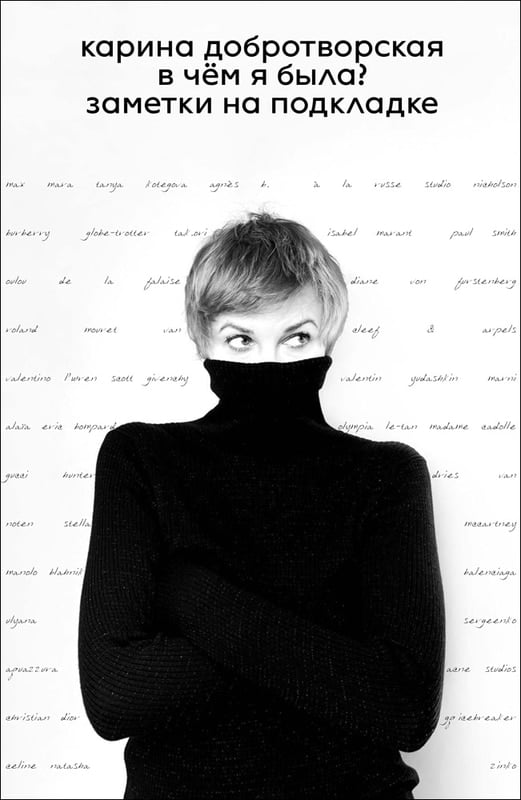
Открываешь шкаф, и на тебя вываливаются вещи. Это не просто платья, туфли, костюмы — это воспоминания. Но что с ними делать? Расстаться с вещами можно, но как расстаться с прошлым? Бывший редакционный директор издательского дома Conde Nast International, автор книги «Кто-нибудь видел мою девчонку?» Карина Добротворская решила дать каждой вещи слово. И вот чёрная водолазка Max Mara, золотой топ Givenchy, платье Alaia, сумка Balenciaga и другие герои рассказывают о предзакатной эпохе глянцевой индустрии, в которой автор провела двадцать с лишним лет. Здесь легенды мировой моды, Алёна Долецкая и Алла Пугачёва, владельцы Vogue — семья Ньюхаусов и «дьяволица в Prada» Анна Винтур, которую Мерил Стрип очеловечила в кино. Здесь нищета России 90-х и лоск нулевых, блеск европейских подиумов, жестокие увольнения, правда о том, как цифровая эра наступила на горло глянцу, здесь отчаяние, любовь, дружба, самоирония. А за всем этим — попытка понять, кто ты в этом мире, который на глазах расползается по швам.
You open the wardrobe, and things tumble out at you. These aren’t just dresses, shoes, and suits; they’re memories. But what do you do with them? You can part with clothes, but how do you part with the past? Karina Dobrotvorskaya, former editorial director of the publishing house Condé Nast International and author of the book Kto-nubud' videl moiu devchonky? (Has Anyone Seen My Girl?), decided to give every item a voice. A black Max Mara turtleneck, a gold Givenchy top, an Alaïa dress, a Balenciaga bag, and other protagonists tell the story of the twilight era of the glossy magazine industry, in which the author spent more than twenty years. Here are legends of the fashion world, Alena Doletskaya and Alla Pugacheva, the owners of Vogue, the Newhouse family, and the “she-devil in Prada,” Anna Wintour, whom Meryl Streep made human on screen. Here are the poverty of 1990s Russia and the polish of the 2000s, the glitter of European runways, brutal layoffs, and the truth about how the digital age put its foot on the throat of glossy magazines. Here are despair, love, friendship, and self-irony. And behind it all is an attempt to understand who you are in a world that is coming apart at the seams before your eyes.