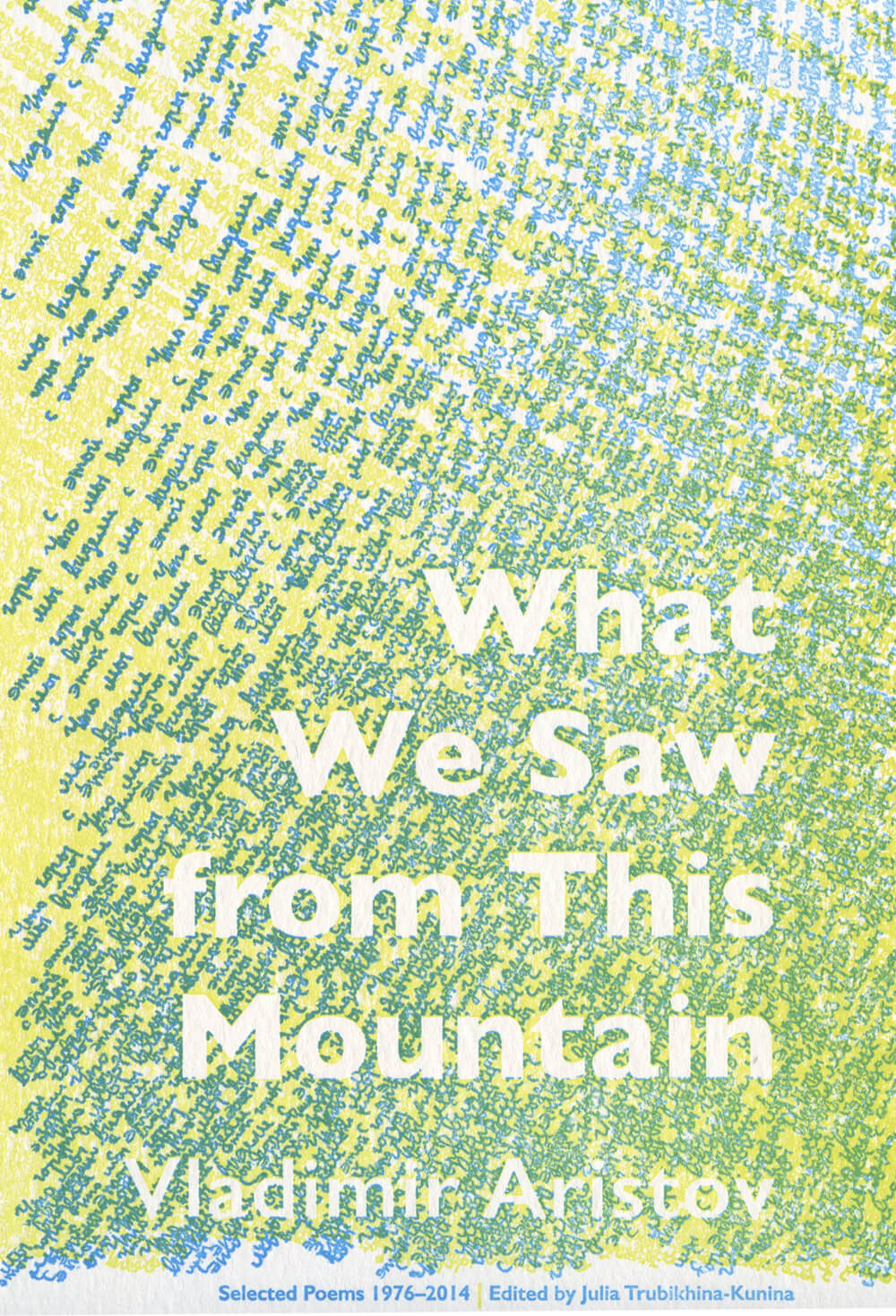
Book 2017

What We Saw from This Mountain RU

What We Saw from This Mountain
Vladimir Aristov
What We Saw from This Mountain What We Saw from This Mountain
Information
Realm
Russian
Author
Vladimir Aristov
Title
What We Saw from This Mountain
Place of Publication
New York
Publisher
Ugly Duckling Presse
Date of Publication
2017
Material Type
Book
Format
Paperback
Number of Pages
107
OCLC Number
986497177
ISBN
9781937027377
Language
English
Russian
Genre
Poetry
Editor
Julia Tribukhina-Kunina
Translator
Betsy Hulick
Yulia Kunina
Vladimir Aristov. What We Saw from This Mountain. Edited by Julia Tribukhina-Kunina. Translated by Betsy Hulick, Yulia Kunina. New York: Ugly Duckling Presse, 2017.
Description
This is the first English-language collection of poetry by contemporary Russian poet, essayist, and prose writer Vladimir Aristov, a satellite figure of the Metarealist literary movement of the 1980s–90s. While the late Alexei Parshchikov and Arkadii Dragomoshchenko are somewhat better known to US readers, Aristov, who was their close friend, exemplifies both poets’ trajectories—his work explores metaphor-centered narrative poetry while assimilating American Language poetry and European postmodern theory. Aristov’s poetics is characterized by a philosophical thoughtfulness made more profound by his life-long work as a scientist, and by striking images that evoke the late poetry of Osip Mandelstam.