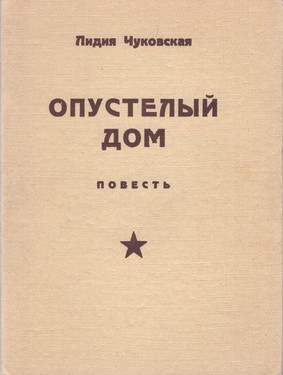
It is to be hoped that this remarkable and superbly written little book will soon be published in English. It is just as significant and, in its own way, fully as masterly as Alexander Solzhenitsyn’s One day in the life of Ivan Denisovich. Like that book, it will rank as one of the classics of Russian “purge literature.” In Ivan Denisovich we are shown life in a Stalinist concentration camp; in Chukovskaya’s Deserted House we are told of the hideous machinery which was used for sending thousands of innocent people to concentration camps at the height of the Yezhovshchina in 1937-38.
The central figure of the story is Olga Petrovna Lipatova, a Leningrad doctor’s widow whose adored and only son Kolya, a brilliant young engineer is, for no conceivable reason, suddenly arrested be the NKVD and then sent to a “distant camp” for ten years, having signed a “confession” that he belonged to “a terrorist organization.” In a note to his mother, smuggled out of the camp, he explains that he was beaten and tortured into signing the confession, and begs her to try to do something, because “I will not last long here.” Feeling completely helpless, the mother burns the note. This is the end of the story, but it is clear that both the mother and the son are doomed to an early death.
Thought not told in the first person, the whole story is seen through the eyes of Olga Petrovna. She is the head of the typing pool in a Leningrad publishing house. Much to her and everybody else’s dismay, the Director of the house is suddenly arrested as “an enemy of the people”; she does not doubt for a moment that the man is guilty, and learns, in the next few weeks of the arrest of many other people with a feeling of anger and disgust – not because she distrusts the NKVD but because of the criminal anti-patriotic activities in which these people were engaged.
And then suddenly her son – highly praised in Pravda as an outstanding young engineer only a few weeks before – is arrested; her immediate reaction is that this is, of course, nothing but an absurd mistake which will be cleared up in the next few days. There then follows the story of her calvary; for nights on end, she has to stand in queues outside the prison and then outside the Prosecutor’s office; for the time she still assumes that to other people in the queue are relatives of criminals, and that she is the only exception. And then, in her office, there begin to occur episodes which open her eyes to the truth. Natasha, a young typist, and daughter of a former Tsarist colonel is sacked for a typing error which is interpreted as a piece of anti-Soviet activity – she had by mistake put Krysnaya Armiya instead of Krasnaya Armiya – which almost amounted to calling the Red Army a “Rats Army.” The girl is finally driven to suicide.
The news of Kolya’s arrest becomes known, and with rare exceptions, the people in Olga Petrovna’s office and in her communal flat behave towards her in a cowardly, mean, or vindictive manner, some trying to demonstrate in this way their own Stalinist zeal. Though told with the greatest calm and economy, the most horrible scenes are those describing the useless queueing outside the prison and the Prosecutor’s office, and the inhuman officials into whose presence the unfortunate woman is finally admitted; after a few words there invariably comes the “That’s all; who’s next?” And the few friends who do not desert her are either driven to suicide or are also arrested.
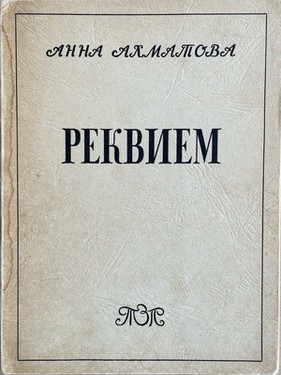
The book tells not only the tragedy of a family, but also that of a whole people. The title is borrowed from a line in Anna Akhmatova’s Requiem and is, indeed, almost a prose version of that famous poem on the Stalin terror, in which Akhmatova’s own son suffered, like thousands of others, the same fate as Chukovskaya’s Kolya, while Akhmatova herself went through the same agony as Olga Petrovna.
A few words should be said about the author. Born in 1907, she is a distinguished writer and the daughter of “Grandpa” Kornei Chukovsky, who is not only a great literary scholar but also the author of the best-loved children’s verses in Russia. She wrote The Deserted House in 1939, soon after the events described, and carefully hid the manuscript for twenty-five years. After the publication of Ivan Denisovich, she hoped to publish it in Russia, but the Party decided against printing anymore “purge” or “camp” stories. Last year Lydia Chukovskaya became famous for the angry and contemptuous open letter she wrote to Sholokhov after his ignominious speech before the twenty-third Congress, in which he regretted that Sinyavsky and Daniel had been let off so “lightly” and had not simply been shot.
Her book has now been published in Paris, on the same principle as Akhmatova’s Requiem – “without the author’s knowledge.” Hundreds in Russia had read the book in typescript and somebody smuggled out one of the copies.
"