Information
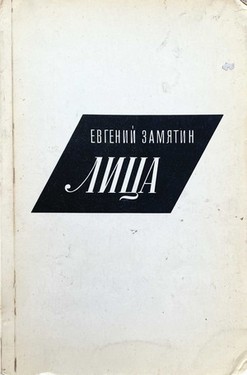
Marc Raeff. Review of Litsa by Evgeny Zamyatin
Марк Раев. Рец. на Лица Евгения Замятина
Text
Traditionally, the popularity and influence of Russian writers have been due as much to their role as literary and social critics as to their purely literary merits. They were expected to be engagés, or at least to speak out their minds on the ways of the world they lived in. The present volume illustrates this side of the career of E. Zamiatin, novelist and essayist of the 1920’s and 1930’s, best known for his prophetic, “utopian” novel My (“We”). The present selection shows Zamiatin as a critic of his confreres and as an ardent spokesman for free and independent literary activity in a Russia that was gradually silenced by the totalitarian requirements of the “party line.” He performed this double task with a keen awareness of the writer’s social and artistic duty and an admirable sense for aesthetic values.
It would be difficult and unfair to select only a few of Zamiatin’s essays for comment. All are very interesting and valuable. The English reader will particularly note the essays on H.G. Wells (one of the longest and most original in the volume), O. Henry, and Sheridan. The short articles on Russian prose writer in the early 1920’s, with their passionate defense of artistic freedom and integrity, may strike the uninitiated as a trifle allusive, but will be rewarding to the connoisseur of twentieth century Russian literature. Finally, we have also a few pages of extremely vivid portraiture of well[-]known artistic personalities (A. Blok, M. Gorky, A. Belyi, L. Andreev, B. Kustodiev). By varying his approach and style, Zamiatin leads the reader actually to experience and feel each individual’s artistic personality.
Zamiatin, who was permitted to leave Russia in 1932 (and died in exile), is obviously condemned to oblivion in the Soviet Union. The Chekhov House has performed a real service in salvaging his writings, at least for the Russian reader abroad.
Marc Raeff
Clark University