Information
Margaret Dalton. Review of Poems by Nikolai Zabolotsky
Маргарэт Далтон. Рец. на Стихотворения Николая Заболоцкого
Text
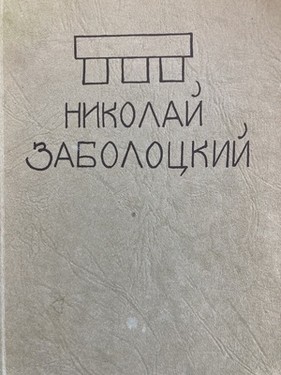
The present volume of Nikolaj Zabolockij’s poetry is another contribution to the series of Western scholarly publications of Russian poets (e.g., Struve’s and Filippov’s editions of Mandel’štam, Pasternak, and Gumilev). Despite the unavoidable omission of some of Zabolockij’s work (such as his translations, his adaptation of Slovo, some poems which appeared in miscellaneous Soviet journals, etc.), it is the most complete edition so far, and may provide an impetus for a more exhaustive study of this interesting but somewhat neglected poet.
The book is prefaced by introductory articles by Aleksis Rannit, Boris Filippov, and Emmanuil Rajs. Rannit considers Zabolockij’s poetry within the general framework of the interrelationship of European art and literature; Filippov is concerned with Zabolockij’s “esthetic reality,” while Rajs regards him in the light of various literary traditions. The articles are followed by a short (and, it seems, “official”) autobiography, as well as the poet’s reminiscences of his early youth, entitled “Rannie gody.” The main part of the volume is devoted to Zabolockij’s poetry, from his first appearance in print in 1926 to his death in 1958. Of particular value is the inclusion of Zabolockij’s early collection “Stolbcy” (1929) and his large poem “Toržestvo zemledelija” (1929˗1930), neither of which was ever reproduced in later Soviet editions. The appendix includes reminiscences of Zabolockij by his contemporaries (Nikolaj Stepanov and Nikolaj Čukovskij), an impressive bibliography, variants and notes to some poems, as well as some examples of Zabolockij’s children’s poetry.
Zabolockij’s wide poetic range – including modernistic, Futurist practices in the early period, and the adherence to “classical” traditions of Russian eighteenth- and nineteenth-century poetry in his later period – was less the result of a specific artistic development than of political pressures and persecutions which marked Zabolockij’s whole life. Nevertheless, the fact that Zabolockij could express himself through such divergent poetic forms testifies to his creative powers and his acute sense for language.
Zabolockij’s early manner is most clearly manifested in “Stolbcy,” a collection of poems deceptively simple and even primitive at first glance, but laden with complexity and density of imagery and meaning. “Stolbcy” earned Zabolockij his literary reputation among poets, and the permanent enmity of Party functionaries. Following the example of Xlebnikov, his acknowledged master, Zabolockij concentrated on verbal play rather than on metrical experimentation and startled the reader by the unexpectedness of his images, his grotesque comparisons, and incompatible combinations of diverse lexical and logical elements. One need think only of such images as the prostitutes who “raised their enamel hands toward heaven and ate sandwiches from boredom,” of the “furious conclave of glasses” which “kindled like a church-chandelier” (“Krasnaja Bavarija”), of the night “walking around inopportunely” while drunken laughter “flies in the shape of a parrot” (“Belaja noč’”), etc. Zabolockij’s vision of the large modern city in “Stolbcy” is grotesque and nightmarish: people appear in it as marionettes manipulated by an unseen hand, while inanimate objects become independent of their usual associations and acquire a life of their own – much as Gogol’’s “Nose” paraded around St. Petersburg in the uniform of a state councilor. Zabolockij’s connection with Gogol’ in portraying a topsy-turvy world with strange mechanical prostitutes and puppet-like Ivanovs on the one hand, and animated cupboards, couches, and lamps on the other, was immediately recognized. It became equally obvious, however, that under the guise of the temporal Zabolockij, like Gogol’, was presenting the “eternal” themes of mediocrity, stupidity, and pošlost’, which were as current in 1930 as they had been a hundred years earlier.
By 1934 Zabolockij had to abandon his early manner (cf. his poem “Proščanie,” on the death of Kirov). His poetry from then on became progressively more muted and conventional in imagery and form. The satiric barb was lost, while a more “positive” tenor appeared in its place. Whether Zabolockij was actually groping for a more organic conception of the world (in contrast to his early fragmented, chaotic vision) or whether this was an enforced development is difficult to ascertain. His themes became more diverse and quietly objective: a large number of poems are descriptions of landscapes and of various seasons of the year. The conquest of nature by man and by modern technology is a recurring theme, as are the poet’s musings on life and death. The problem of immortality, however, never acquires any religious connotation, but reflects rather a pantheistic belief in continuous re-incarnations. Although Zabolockij seems to have become more distant to the world of man in his late period, he at times presents human portraits with sensitivity and keen psychological insight. A very interesting place in Zabolockij’s late poetry is occupied by a small cycle of love poems entitled “Poslednjaja ljubov’,” evoking the memory of Tjutčev. The poems are characterized by a simplicity of diction and a directness that is far removed from the early, exuberant Zabolockij. The poem “Vstreča,” with its tantalizing poetic groping to express a moment of love, belongs among Zabolockij’s best poems.
Bent, but not broken, Zabolockij found even in his last years enough creative power to see the beauty of this world and to glorify it in poems of brilliant colors and acute freshness of vision. He also preserved a quiet dignity which few of his contemporaries managed to retain. As a poet he is, however, most memorable in “Stolbcy,” and a poem like “Krasnaja Bavarija” in its strange intensity and muffled drama may remain as memorable as Blok’s famous “Neznakomka,” to which it is doubtlessly, though distantly, related.
Margaret Dalton
Brown University