Сцена представляет собой кабак...
Направо прилавок и полки с бутылками.
В глубине дверь, ведущая наружу. Над нею
снаружи висит красный засаленный фонарик.
Пол и скамьи, стоящие у стен, вплотную заняты
богомольцами и прохожими.
Многие, за неимением места, спят сидя.
Глубокая ночь. При поднятии занавеса
слышится гром и в дверь видна молния.
А.П. Чехов, Полн. собр. соч. и писем. М., 1978, т. 11, стр. 183
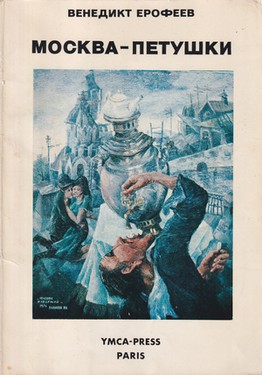
«Москва–Петушки» – это «Исповедь сына века», это «Герой нашего времени», это «Сентиментальное путешествие», это «Всепьянейшая литургия».
Во дни сомнений, во дни тягостных раздумий о судьбах моей родины – ты один мне поддержка и опора, о великий, могучий, правдивый и свободный русский полив! Не будь тебя – как не впасть в отчаяние при виде всего, что совершается дома?
Это роман маслом для фортепьяно с оркестром, написанный на смещении критериев – и потому единственно правдивый. Его, Ерофеева, явление предвидя, писал великий русский поэт:
Подымем стаканы, содвинем их разум!
Да здравствуют музы, да здравствуют разом![i]
* * *
Пить всегда смешно. Смешно пьющему, смешно тем, кто смотрит на пьющего. Любой абстинент упирается в неразрывность пьяного и смешного: смешное уже не может быть опасным. Сакральный смех в истории человеческого духа представлял и представляет глубинное позитивное начало. Очищение от предыдущего «серьезного» цикла, обновления жизненных сил, возвращение к изначальному акту творения. Глобальный смех (не юмор и сатира тощего реализма) – есть сила живородящая. Карнавальный смешной мир навыворот Рабле и Гоголя – законченный образец такого смеха.
И всегда карнавальный миросозидающий смех сопровождался буйным кликом: «Hic bibitur!» – «Дерябнем!»
Когда мы смеемся над забулдыгой, переползающим дорогу, сакральный смех щекочет нам горло, и в алкаше мы гоготом приветствуем революционера, пытающегося заменить «серьезный» мир смешным.
По своей литературной сути «Москва–Петушки» – фантастический роман в его утопической разновидности. Венедикт Ерофеев создал мир, в котором пьянство – закон, трезвость – аномалия, а Веничка – пророк его. Мир – это мир, и он не может жить с сознанием ущербной неполноты своего бытия. В отличие от Творца, Ерофеев творил не на пустом месте: мир уже был, но мир был плох, и следовало создать его заново.
Веничка Ерофеев глубоко убеждён: трезвое человечество губит свою прекрасную душу на всё то, из-за чего «люди столько стараются, суетятся, работают, плавают и воюют»[ii]. Нет, человек – частица вечного – должен жить чисто, светло и прекрасно. Так, чтобы не ошибиться в рецептах. В поисках блаженства познания промысла Божьего. И когда человек познает его, то будет в душе его радость и умиротворение, и всегда будет в мире его вымя и херес, а сам он будет сидеть и играть – то на мандолине, то в сику. И если есть ад нашего сумасшедшего земного мира, то есть и рай высшего царства, в котором человек, не отвлекаясь на погоню за бессмысленными ценностями, сидит и постигает высший смысл непостижимой икоты.
«Но есть и Божий суд»[iii], – кричит Веничка, и ангелы слышат его.
* * *
Прихожу в Сорбонну и говорю: хочу учиться на бакалавра. А меня спрашивают: «Если ты хочешь учиться на бакалавра – тебе должно быть что-нибудь присуще как феномену. А что тебе как феномену присуще?»... Я говорю: «Ну что мне как феномену может быть присуще? Я ведь сирота». «Из Сибири?» – спрашивают. Говорю: «Из Сибири». ...Подумал и сказал: «Мне как феномену присущ самовозрастающий логос».
Хороши бы мы были, если б искали смысла и расшифровки того, что смысла и расшифровки не имеет. То есть полива.
Полив – байстрюк великого и могучего – один он утеха и отдохновение. Укрытие алогизма нелепицы от разбушевавшихся причинно-следственных связей. Если не он, то кто ответит божественной глоссолалией, чудным ангельским языком на тусклый и серый глас будней. Но что есть полив?
Полив есть полиассоциативное семантико-фонетическое явление, порождающие квазилогику. Полив – экстаз языка. Захлебывающаяся скороговорка смыслов и рифм, ибо «человечество говорит в рифму чаще, чем оно думает»[iv]. Если бессмысленное созвучие «-бовь-ровь» по гроб связывают смерть с рождением, то почему рифма имен и понятий не может бисерной иглой прорваться сквозь тень обыденности в день потустороннего – абсурдом полива. Ведь повторяет десятое поколение школьников гениальный полив бессмертного человека – «Редкая птица долетит до середины Днепра». Брюссельско-вологодское хитросплетение абсурда, «dada» дадаистов, священная «он мани падме хум» тибетских мудрецов – не есть ли все это сгусток чувственный информации? Не есть ли это клич к Богу? И ключ к Богу?
Сидит Веничка в мансарде, мезонине, флигеле, антресоли, чердаке и сочиняет эссе по вопросам любви под французским названием «Шик и блеск иммер элегант», а абсурд корчится в поливе, и рвется из него подспудная и откровенная ясность бессмыслицы. Ясность голосящей юродивой, чей ангельский язык понятен лишь ей и богу.
* * *
Отчего «Москва–Петушки» так похожи на «Путешествие из Петербурга в Москву»? Не оттого ведь, что путешествие, что там Хотилов – тут Салтыковская, там Крестьцы – тут Дрезна. А вот: «И узрел, что бедствия человека происходят от человека, и часто оттого только, что он взирает не прямо на окружающие его предметы». Откуда это? Понятно, по языку понятно, что из Ерофеева, но и дворянский революционер Александр Николаевич смог бы такое написать.
Или это: «Все на свете должно происходить медленно и неправильно, чтобы не сумел загородиться человек, чтобы человек был грустен и растерян», – это уже, конечно, Радищев, человек глубоко религиозный, несмотря на всё свое свободомыслие, но вполне мог бы быть и Ерофеев.
А разве не одна и та же по сути мысль сквозит у обоих русских писателей: «Член общества становится только тогда известен правительству, его охраняющему, когда нарушает союз общественный, когда становится злодей!». Диалектическая спираль вознесла этот тезис на новую высоту, и в стране, где всегда есть место подвигам, каждый член общества известен правительству, потому что каждый – злодей, и поэтому злодей – каждый. И мерзавец Веничка, в пагубном легкомыслии убегающий в петушинские прелести, ибо «непрямо взирает на окружающие его предметы», а уж этого-то делать никак нельзя. Он, мятежный, ищет уголок, в котором не всегда есть место подвигам.
То, что «Москва–Петушки» – не просто путевые заметки, неоднократно отмечалось критиками: «Однако произведение – не просто образное описание путешествия. Эта книга носит совсем иной характер, и путешествие приобретает здесь символический смысл... [оно] было формой обобщения, типизации многочисленных поездок автора по России, а также его косвенного опыта в этой области, обобщение всего того, что он слышал и узнал... относительно своей страны…»[v]
* * *
Как изменился мир со времен евангелистов! Где взять их наивную и мудрую простоту выражения? Будет день – будет и пища.
Несть числа уверткам и вывертам инженеров человеческих душ. Да что толку: все уже сказано, и по-всякому. А Ерофеев пришел в мир с новым миром, как же рассказать о нем? Ведь новому миру нужен новый язык. Где взять?
И взял Веничка все книги, что были до него. И из каждой взял понемногу, и взял лучшее из лучших и худшее из худших. Никого не обидел Веничка от Антонина Дворжака до Николая Островского. Все собрал он воедино и рассказал в назидание народам древности повесть о людских страстях и томлении духа. И вышло, что все великие инженеры поют под его, Венину‚ дудку, а если где и соврал Веня, то неизвестно, у кого лучше получилось.
Как будто прост и незатейлив рассказ Ерофеева, а сколько серебра по хрусталю звучит в его изысканной фразе. Только пропущенной главы «Серп и Молот – Карачарово» не достает, чтобы воистину оценить неожиданность эпитета и удивительный ритм инверсий, патетику высокого слога и синтаксис потока сознания, хитрый умысел речевых характеристик и лирику молитв. Монтаж цитат, коллаж реминесценций.
Кто другой, как не Ерофеев, мог так воспеть красу несравненной из Петушков, у которой коса от затылка до попы? Только тот, мудрец народов древности, который писал:
Ой-ой‚
Не зад у ней, а праздничное шествие![vi]
* * *
Композиция, архитектоника – эти готические, остроугольные слова-скелеты – так не лепятся к Веничкиному апокрифу. Но стоит взглядеться [sic!] в блаженную поступь кайфа, как привычный взгляд различит в псевдохаосе слов и поступков тщательную пропорцию и гармонию. От первого робкого глотка до мучительного отсутствия последнего. От утренней закрытости магазинов до вечерней. От похмельного возрождения до трезвой смерти. Гладко экспозиция переходит в завязку, та – в кульминацию, а оттуда – к трагическому эндшпилю с неминуемым катарсисом. О, как точна и искусна клиническая картина пьянства в ее классицистском триедином варианте! Как знает автор свою тему и как подчиняется она ему! И как взлеты алкоголического духа услужливо ластятся к восторгам желудка. Да, дух, могучая Веничкина идея, до унизительного связана с каждым глотком пахучей амброзии.

Всмотритесь в этот тупой угол и возблагодарите Бога за тупость этого угла. Ибо в его вершине – блаженство, а в лучах его восхождение и пропасть. Как в извилистой черте‚ изображенной палкой достопочтенного папы Тристрама Шенди, скрывалась разгадка жизни, так и в этом угле кроются концы и начала книги и жизни Венедикта Ерофеева. Вот с первой дозой теплой «Кубанской» начинается восхождение по пологому левому лучу. И с каждой дозой растет Веничкино преклонение перед мудростью и бесконечностью Всевышнего, и все ближе и достижимей кажется светлый образ мира с хересом и сикой. Но слишком узко соединение двух лучей‚ и не дано смертному удержаться на вершине. Ибо сказано в мире прекрасного, «если тихий человек выпьет семьсот пятьдесят, он сделается буйным и радостным. А если он добавит еще? – будет ли он еще буйнее и радостнее? Нет, он опять будет тих... он уже пьян, как свинья, оттого и тих».
Да, тесна вершина, но нет мира прекрасней, чем тот мимолетный, что расположен в ее альпийской высоте. Быть может‚ в краткости пьяного просветления и заключена расплата за первородный грех неверия и сомнения. А может, не в силах человеческих выдержать вечное блаженство просветленного разума? Как не вспомнить здесь Наполеона, который за пятиминутное семяизвержение обещал империю. Но не даны пять минут узурпатору‚ и не дана Веничке бесконечность прямой вместо бесконечности точки. И ночь сменяет день, и ад – рай, и демонами стали ангелы.
Знает Веня суровую правду жизни, но он – певец и пророк пьяного мира – призван благовестить о высшем откровении в жизни духа, о святых дарах и экстазах. Веня-буревестник тормошит и будоражит трезвое паскудство течения дней, и конец Венички – конец мифа и легенды, смертный час нарядного‚ как переводная картинка, мира: тишина. Летите, в звезды врезываясь. Ни тебе аванса, ни пивной – ТРЕЗВОСТЬ.
* * *
И видит Вера Павловна Ерофеев сон: «золотистым отливом сияет нива, аромат несется, окрестные луга озарились огнем – в лугах варят пунш, везде алюминий и алюминий, все счастливые красавцы и красавицы, ведущие вольную жизнь труда и наслаждения»[vii].
Просыпается В.П. Ерофеев и пишет «Из рассказов о новых людях», а что делать – он знает и сам: не поддаваться на иезуитские выверты Петра Великого и Дмитрия Кибальчича‚ а искать свое‚ исконное. Да и может разве машина постичь высший смысл пьяной икоты? Нет, В.П. Ерофеев задачу воспитания нового человека ставит прежде задачи создания материально-технической базы. Дело это непростое. Помнится, один серьезный человек предлагал‚ например‚ такое: «По части умственной работы... переводы и притом обратные, т.е. сначала с иностранного на русский письменно, а потом с русского перевода опять на иностранный. ...А по части физической... гимнастику ежедневную и обтирания»[viii].
Веничке, правда‚ и эти советы не нужны. В его светлом мире бледно-голубая похмельная глазница наливается красным портвейном в прожилках, и человек преображается, одухотворяется‚ и «можно подойти и целых полчаса с расстояния полутора метров плевать ему в харю, и он ничего тебе не скажет», потому что занят высоким и нужным.
В гармоничном мире гармонией исполнены и его категории. Рыжеволосая дьяволица чище Беатриче сбегает на петушинский перрон. И нет в ней изъянов – лишь сокровенные изгибы, и никто не бросит в нее камень, «ибо она совершенна, а совершенству нет предела», как нет и суда.
Ворочается младенец в кроватке, возле которой пьет лимонную Веня – Творец и Созидатель, Лобачевский и Эйнштейн. Младенец, умеющий произносить букву «Ю» – провозвестник божественного полива. И через эту лимонную «Ю» светят Вене преемственность и надежда. Он, младенец, единственная непреходящая часть мира, в пространстве существующего на пути от Москвы до Петушков, а во времени – от открытия и до закрытия магазинов и во веки веков. И только для младенца не находится у Вени полива, потому что некуда прорываться, потому что не нужен экстаз и глоссолалия, потому что это уже – гавань, прибежище, ковчег.
Потому и не доезжает Веня до Петушков, бесовским кружением возвращаемый в Москву.
* * *
Бога можно славить по-разному. Нет на Земле племени, славящего Его одинаково с другими, как нет кощунства‚ не звучащего молитвой в чужих устах. Как мало, в сущности, надо, чтоб оказаться по эту сторону добра, а не по ту сторону справедливости! Как просто отделить зерно от плевел! Как обольстительно легко найти ответ на вопрос «а есть ли?..»
Икота. В ее неисповедимом ритме «-тринадцать-пятнадцать-четыре-двенадцать-пять-двадцать восемь –» не кроется ли знамение почище неопалимой купины. Да, кроется. Ибо «она (икота)‚ то есть Божья Десница, которая над всеми нами занесена и перед которой не хотят склонить головы одни кретины и проходимцы. Он непостижим уму, а следовательно, Он есть. ...Да. Больше пейте, меньше закусывайте.»
Неужели наш жребий – уподобиться кретинам-проходимцам? Неужели увидим в откровении кощунство и в исповеди пародию?
Веничка пришел в мир, чтобы промыть его заплесневевшие глаза «Слезой комсомолки». Чтобы одухотворить бездуховность бытия измышленным пьяным миром.
Давно уже в России существует этот мир. А создали его водка и книги. Иногда чуть больше водки‚ иногда чуть больше книг. Но люди живут в несуществующем так же запросто, как в коммунальной квартире: привыкли, устроились, да и что делать в существующем? Работать, плавать и воевать? Не зря давно уже зреет мысль: реальность искусства реальней реальности жизни. А от вымышленного мира искусства до измышленного пьяного мира расстояние куда короче, чем от великого до смешного.
Веничка – пророк мира вечнооткрытых магазинов – опирается на деятелей Strum und Drang и Могучей кучки, как Христос на Иоанна Крестителя. Бунин пил, «а Куприн и Максим Горький – так те вообще не просыпались». И Шиллер, и Гоголь, и Пушкин, и Герцен.
В новом веничкином мире все писатели пьют, и все, кто пьют – писатели. А иначе откуда у дедушки Митрича талант и жалость так рассказать о любви, как он рассказал про председателя Лоэнгрина: «...Придет к себе в правление, ляжет на пол... тут уже к нему не подступись – молчит и молчит. А если скажешь ему слово поперек – отвернется он в угол и заплачет... стоит и плачет…и пысает на пол, как маленький...»
* * *
Фантастический (реальный) мир «Петушков» имеет свою историю и знает своих героев. Вот из кустов жасмина выходит блестящий теоретик Вадим Тихонов‚ чьи тезисы прибиты к сердцу каждого. Мелькает отблеск‚ прообраз того царства алюминиевой гармонии‚ где несть ни эллина‚ ни иудея‚ а есть единство вымени и хереса – воплощенная мечта гурмана и гуманиста. Тогда, выступив «двумя колоннами, с штандартами в руках, ...колонна на Елисейково‚ другая – на Тартино», президент Ерофеев и канцлер Тихонов со товарищи несли могучие идеи переустройства Вселенной. Их помыслы были чисты, намерения – благородны: обязать тетю Шуру в Поломах открывать магазин в шесть утра, объявить войну Норвегии, заставить тетю Машу в Андреевском открывать магазин в пять тридцать, отдать Юзефу Циранкевичу польский коридор, «а какую-нибудь букву вообще упразднить, только надо подумать‚ какую».
И только убедившись в том, что человечество не желает земного рая, Веня умыл руки‚ допил остаток «Российской» и пошел вон от своей военно-политической славы, плюнув на низкое солнце Аустерлица‚ от своего Тулона – в рай Петушков, где его поймут и примут.
* * *
Трепетное сродство душ, со-чувствие явилось впервые где-то между Есино и Фрязево. Презрев низость житейских проблем‚ лишь о высоком и прекрасном говорили и декабрист, и Митричи‚ и женщина сложной судьбы. И не было в их беседе ничего мелкого и несущественного. Как жалкий мастерок преображается в руках титулованных масонов, так сияют рубиновым светом чирьи председателя Лоэнгрина, возвещая о высокой трагедии неразделенной любви. Любовь‚ Искусство, Судьбы Народа – лишь эти предметы достойны человека, несомого двумя бутылками «Кубанской» в петушинские кущи. В этом разговоре – до звона напряженном, интеллектуальном и эмоциональном заоблачно – Николай Гоголь пьет водку из розового бокала‚ Модест Мусоргский лежит в канаве с перепою, тридцать самых плохих баб лучше одной самой хорошей, и мучительно волнует проклятый вопрос: «Где больше ценят русского человека, по ту или эту сторону Пиренеев?»
Служенье муз не терпит суеты.
* * *
Начинает Веничка кошмаром, сходя со ступеньки в подъезде‚ по счету снизу сороковой – в город, который утро уже красит нежным светом, город, готовый закипеть и возмогучеть. Выходит Веня‚ прижимая к сердцу чемоданчик‚ и видит вдруг пидора, скребущего тротуар, и черным коршуном спускается ужас: рано. «От шестого же часа тьма была по всей земле до часа девятого» (Матф. 27:45). Да‚ «о, самое бессильное и позорное время в жизни моего народа – время от рассвета до открытия магазинов!»
Как и всякому человеку, Вене надо к Кремлю. Ему с первой же строки надо к Кремлю – в болезненно-извращенном мазохизме‚ туда‚ где закаляется сталь, где кавалеры Золотой Звезды замужем за стряпухами, где круче всего закругляется земля, где бьется пульс планеты. И до последней страницы, когда «с последней ступеньки бросились душить, сразу пятью или шестью руками» – до последней страницы горят во мраке рубиновые звезды и выезжает маршал на коне, маршал, знаменитый по всей стране. Но бережет между первой и последней страницами Веню Нечто, раз за разом выводя к Курскому вокзалу и увозя к Петушкам. Мелькают любезные сердцу Серп и Молот, Карачарово, Назарьево, но сил нам нет кружиться боле, колокольчик вдруг умолк.
«–Ты от нас? От нас хотел убежать? – прошипел Один.» – И в его вопросе меньше гнева, чем истерического любопытства. – «…И схватил меня за волосы и, сколько было силы, хватил меня головой о кремлевскую стену». – О стену древнего Кремля, к которому пришел наконец Веня.
И, может быть, напрасно бежал он от ада Кремля в рай Петушков, напрасно рвался к совершенству: к рыжеволосой дьяволице с косой от затылка до попы, к младенцу, умеющему произносить букву «Ю», к ресторанам, где к вымени безропотно и торопливо несут херес. Круг замкнулся, и ангелы насмеялись над Веней. Да и ангелы ли это? Может, мчатся бесы рой за роем, в беспредельной вышине, визгом жалобным и воем надрывая сердце? Ну вот, ведь сказано же: визгом и воем, а он – смех!
Нет никакого ада, нет никакого рая, есть только то, что есть, и нет ничего страшнее этого, и нет спасения. В самом начале дня-жизни-книги было сказано слабому и растерянному: «Талифа куми»‚ и он встал и пошел, сперва шатаясь от холода и горя, потом стервенея и веселясь, и розовое крепкое за рупь тридцать семь стало его кровью, и ласковая громада Курского вокзала выпустила его в Елисейские поля. А в конце дня-жизни-книги‚ когда он‚ скрючившись на верхней лестничной площадке, слушал жуткий скрип дверей, они собрались все: Луи Арагон под руку с Эльзой Триоле, ревизор Семеныч в исподнем, Митричи в соплях‚ декабрист в коверкотовом пальто, палачи из привокзального ресторана, соратники по революционному перевороту... С той, с этой стороны, из ада и из рая. А ТЕ поднимались‚ держа в руках обувь, и никто не мешал им‚ только ангелы, подвизгивая‚ хохотали. И в дикой мешанине дня-жизни-книги уже он воззвал: «Или, или, лама савахфани!» Но – «они вонзили свое шило в самое горло... Я не знал, что есть на свете такая боль, и скрючился от муки, густая красная буква “Ю” распласталась у меня в глазах и задрожала. И с тех пор я не пришел в сознание и никогда не приду».
Потому что нет никакого ада, нет никакого рая, есть только то, что есть, и нет ничего страшнее этого, и нет спасения.
ПРИМЕЧАНИЯ
[i] А.С. Пушкин. Полн. собр. соч. в 10 тт. Изд. АН СССР, М. 1957‚ т. 2‚ стр. 269.
[ii] Ф. Рабле. Гаргантюа и Пантагрюэль. М. 1956, стр. 8.
[iii] М.Ю. Лермонтов. Собр. соч. в 4-х тт. М. 1975‚ т. 1‚ стр. 25.
[iv] См. А. Терц. Голос из хора. Лондон, 1973, стр. 18.
[v] Орлов О.В., Федоров В.И. Русская литература. М. 1972‚ стр. 248.
[vi] Аристофан. Мир, стр. 470. В кн.: Античная драма‚ БВЛ‚ М. 1970.
[vii] Н.Г. Чернышевский. Собр. соч. в 5 тт. М. 1974‚ т. 1‚ стр. 364–365‚ 375‚ 383.
[viii] В.И. Ленин. Письма к родным, 1984–1919. М. 1934‚ стр. 267–268.
The scene is a tavern…
On the right - a counter with bottles. In the depths - a door leading outside. Above it, outside, hangs a red, grimy light. The floor and benches by the walls are full of pilgrims and passersby. Many, due to an absence of a place, sleep sitting. It is the middle of the night. With the lifting of the curtain, one hears thunder and sees lightning in the doorway.
(A.P.Chekhov, Full Collected Works and letters, Moscow, 1978, vol.11, p. 183)
“Moscow at the End of the Line” is the “Confessions of a Child of a Century”, “A Sentimental Journey”, and the “Confitemini Dolio”.
In days of doubt, in days of agonizing reflections on the fate of my home, thou alone art my stay and my staff, oh, the great, mighty, true and free Russian pour! If thou wert not, would it be possible not to despair at this moment over all that is happening in my home?
It is an oil-painted spectacle with piano and orchestra in the pit that was written during a shift of criteria, and thereby the most truthful. Predicting the phenomenon of Erofeev, the great Russian poet wrote:
“Let’s raise the glasses, let’s squish their reason!
All hail the muses, all hail them together!”1
Drinking is always funny. It is funny to the drinker, it is funny to those observing him. Any abstainer is confronted with the inseparability of the drunk and the funny: what is funny can no longer be dangerous. Sacred laughter encapsulates the history of the human spirit, which consisted and consists of a deep positive beginning. A cleansing of the previous “serious” cycle, a renewal of life’s forces, a return to the initial act of creation. Global laughter (not the humor and satire of meager realism) is a life-bearing force. The topsy-turvy, carnivalesque world of Rabelais and Gogol is the finished specimen of such laughter.
This carnivalesque, world-creating laughter has always been followed by an exuberant call: “Hic bibitur!” - “Let’s wack one out!” (Dieriabnem!).
When we laugh at a drunkard crawling across the road, the sacred laughter tickles our throat, and in the alcoholic, cackling, we greet a revolutionary who sets out to exchange the “serious” world for a funny one.
In the literary essence of “Moscow at the End of the Line” lies a fantastical novel in the utopian subgenre. Venedikt Erofeev created a world in which drunkenness is the law, sobriety is an anomaly, and Venichka is its prophet. The world is the world we all know, and he cannot live with the awareness of how flawed and incomplete his existence is. Unlike the creator, Erofeev did not create in emptiness: the world already existed, but it was bad; it had to be created again.
Venichka Erofeev is deeply convinced that sober humanity is killing its wonderful soul for all those things, for which “people try, fuss, work, swim, and fight so much”2. No, man is a part of the eternal, and must live cleanly, lightly, and wonderfully. In such a way as not to err in the recipes. In the search for the bliss brought by the knowledge of God’s providence. And when man understands this, then in his soul there will be happiness and tranquility, and in his world there will always be udders and sherry, whereas he will simply sit and play either sika or on the mandolin3. And if there exists a hell of our wild earthly world, then there is a heaven of the high kingdom, in which man, undistracted by the race for meaningless values, sits and comprehends the elevated meaning of the incomprehensible hiccups.
“But there is also divine judgement!”4 Venichka screams, and the angels hear him.
“I arrive at the Sorbonne and say that I want to study the baccalaureate. Whereas they ask me: ‘If you want to study the baccalaureate, then something has to be innate in you, as in a phenomenon. What is innate in you as a phenomenon?’ …I tell them: ‘Well, what can there be innate in me as in a phenomenon? I am an orphan after all.’ ‘From Siberia?’ they ask. I tell them: ‘From Siberia’...I thought a bit and said: ‘What is innate in me, as in a phenomenon, is the self-growing logos.’”
We’d be fools if we tried to dig out meaning and crack a code in something that has no meaning and no code to crack. i.e., the pour (poliv).
The pour is the bastard of the great and the mighty; it alone is solace and repose. The pour shelters nonsense’s alogism from the enraged philosophy of cause and effect. If not the pour, then who will answer with the divine speaking in tongues (glossolalia), with the wondrous angelic language to the dim and gray voice of the weekdays? But what is the pour?
The pour is a poly-associational, semantic-phonetic phenomenon that gives rise to quasi-logic. The pour is the ecstasy of language. The choking tongue-twister of meanings and rhymes, for “humanity speaks in rhymes more often than it thinks.”5 If the meaningless consonance “bov’-rov” definitively connects death with birth, then can the rhyme of names and concepts not be the beading needle to rip through the shadow of the everyday into the day of the supernatural, by the absurdity of the pour? After all, the tenth generation of schoolchildren repeats the genius pour of the immortal human: “A rare bird will fly till the middle of Dniepr”. A Brussels-Vologdan cunning tangle of absurdity, “dada” of the dadaists, the holy “om mani padme khum” of the Tibetan wisemen; is all this not just a lump of overly sensitive information? Is this not a call to God? And a clue to God?
Venichka sits in the loft, the mezzanine, the outhouse, the storage room, the attic, and forges an essay on the questions of love with a French name: “Chic and Glamour Immer Elegant”, all while the absurd keeps grimacing in the pour bursting with all the latent and sincere clarity in nonsense: the clarity of the shrieking holy fool, whose angelic language is intelligible only to her and God.
Why is “Moscow at the End of the Line” so similar to “The Journey from St. Petersburg to Moscow”? Not because it is also a journey; there we have Khotilov, here Saltykovskaya, there we have Krestsy, here Drezna. But because of this: “And I beheld, that man’s afflictions come from man, and often only because he gazes indirectly on the objects that surround him.” Where is this from? It is clear, clear from the language that this comes from Erofeev, but even the noble (dvoryanskiy) revolutionary Alexander Nikolayevich could have written something like this.6
Or this: “Everything in the world should happen slowly and incorrectly, so that man does not become overly prideful, so that man will be sad and lost.” This statement, of course, is by Radischev, a profoundly religious person despite his free thought, but it could just as well have been Erofeev.
Is it not in essence the same thought that shines through in both of these Russian writers: “A member of society only becomes known to the government that protects him when they break the social union, when they become a villain.” In a country where there is always space for heroic feats, the government knows each member of society, because each member is a villain, and thus the villain is each one of us; the dialectic spiral has raised this thesis to a new height. And Venichka, a scoundrel, in his pernicious frivolity escapes to the beauties of Petushki, for he “indirectly gazes at the objects that surround him.” Such an escape could not have been allowed under any circumstances. He rebelliously searches for a corner where there will not always be a place for heroic feats.
Critics have not once underlined that “Moscow at the End of the Line” is not simply a travel notebook: “However, this work is not merely a description of travel. This book carries a completely different character; here, the journey takes on a symbolic meaning…[it] was a form of synthesis, a typification of his many journeys around Russia, and his indirect experience in this field, the synthesis of all that he heard and found out…relating to his country.”7
How the world changed from the time of the evangelists! Where do we find the naive and wise simplicity of their expression? When the day comes, so will the food.
Innumerable are the flips and quirks done by the engineers of people’s souls. What is the point? Everything has already been said and in different ways. Erofeev came to the world with a new world. How do we tell his story? After all, a new world needs a new language. Where do we find it?
So Venichka took all the books that existed before him. And from each, he took a little bit; he took the best from the best and the worst from the worst. He did not offend anyone from Antonín Dvořák to Nikolai Ostrovsky. He brought it all together and narrated to the ancients, as a warning, a novel about people’s passions and the yearning of the soul. And it turned out that all the great engineers danced to Venya’s tune, and even if Venya did lie somewhere, it remains unknown who did it better.
Venya’s tale seems so unpretentious and simple, yet there is so much verbal filigree in his refined phrase. We only lack the skipped over chapter “Serp i Molot - Karacharovo” to truly value the surprise in his adjective and the wondrous rhythm of his inversion, the pathos of the elevated syllogism and the syntaxis of his stream of consciousness, the cunning intent of speech characteristics, and the lyricism of his prayers—the montage of citations, and the collage of memories.
Who else, other than Erofeev, could glorify the beauty of the incomparable woman from Petushki, whose braid runs down from her neck till her butt? Only that wiseman of the ancients, who wrote:
“Oi, Oi, It is not a butt that she has, but a celebratory parade!”8
The composition, the overall design - these gothic, sharp-edged word-skeletons - oh, how poorly they fit into Venichka’s aprocrypha. But as soon as you look into the blissful pace of the buzz, the familiar gaze discerns, amid the pseudochaos of words and actions, proper proportion and harmony. From the first unsure sip to the torturous absence of the last. From the closed stores in the morning till the closed stores in the evening. From the hungover excitement of rebirth till the sober death. The exposition smoothly moves toward the plot, the plot toward a culmination, and from there to the tragic endspiel, with the inevitable catharsis. Oh, how sharp and precise the clinical image of drunkenness is in its classicist three-pronged form! Oh, how the author knows his theme and how it submits itself to him! And oh, how the soaring alcoholic spirit obligingly fawns over to the stomach’s delights. Yes, the spirit, Venichka’s powerful idea, is until humiliation connected to each sip of the odorous ambrosia.
Рис. 1
Look into this obtuse angle and thank God for its obtuseness. For in its climax is bliss, and in its corner beams is the ascent and the abyss. Just as in a winding line, showcased through the cane of Tristram Shandy’s well-respected father, hides the solution to life, so in this angle are hidden the ends and the beginnings of Venedikt Erofeev’s book and life. With the first dose of the warm “Kubanskaya” begins the ascent on the gentle slope of the left corner beam. And with each dose, Venichka’s adulation of the Almighty’s wisdom and eternity grows, and the world’s bright image with sherry and sika seems closer and in reach. But the connection of the two corner beams is too narrow, and the mortal man is not given the right to remain at the top. For it is said in the beautiful world: “If a quiet person drinks 750, he will be happy and exuberant. And if he adds more? Will he be even happier and more exuberant? No, he will again be quiet…he is already drunk, as a pig, that is why he is silent.”
Yes, the summit is crowded, but there is no world more wonderful than that fleeting one at the Alpine heights. Maybe it is in the brevity of the drunk enlightenment that one can locate the retribution for the original sin of disbelief and doubt. But perhaps no human has the power to endure the enlightened mind’s eternal bliss? How can one not remember Napoleon here, who, for a five-minute ejaculation, promised the whole empire? But the usurper is not given five minutes, and Venichka is given the eternity of the full stop instead of the eternity of the straight line. And day is exchanged for night, hell for heaven, and demons become angels.
Venya knows the harsh truth of life, but he, the bard and the prophet of the drunken world, is called to preach the highest revelation of the spirit, its holy gifts and ecstasies. Venya, the petrel, awakens and agitates the sober shamelessness of the day’s usual flow.
Venichka’s end will be the end of myth and legend, the final hour of the carnivalesque, the decal of the world: silence. Fly, crashing into the stars. There are no salary advances or breweries - SOBRIETY.
And Vera Pavlovna sees a dream: “The golden tide shines, the aroma rushes, lights ignite the neighboring fields, there is aluminum everywhere, everyone is happy, all men are handsome, and all women are beautiful who lead a life of labour and pleasure.”9 V.P. Erofeev wakes up and writes “From the tales about new peoples,” and what is to be done, he knows himself: one must not succumb to Peter the Great’s and Dmitry Kibalchich’s Jesuit quirks, but search for one’s own, the primordial. Could a machine ever comprehend the high meaning of drunk hiccups? No, V.P. Erofeev puts the task of raising a new man before the task of creating a materialist-technical base. This task is not simple. I remember that one serious person proposed: “In the part of intellectual labor, translations and reverse ones, i.e, first from a foreign language into Russian by writing, and then from the Russian back into the foreign language. And in the part of physical [labor]...daily gymnastics and scrubbing.”10
Venichka, in truth, does not even need this advice. In his bright world, as soon as the capillaries in hangover’s pale-blue eye fill up with red port wine, man is transformed, he is inspired, and “one can approach him and for a whole half-hour from the distance of a meter and a half spit in his face, and he will not say anything to you,” because he is occupied with the high and the necessary.
The categories of a harmonious world are full of such harmony. The ginger-haired succubus, quicker than Beatrice, runs down to the Petushki train platform. No imperfections, only the cherished curves, and no one is going to throw a rock at her, “for she is perfect, and there is no limit to perfection,” as there is no judgment for it either.
An infant wiggles in the bed, next to which Venya drinks Limonnaya. He is the creator and the builder; he is Lobachevsky and Einstein. The infant, who knows how to pronounce the letter “Ю”, is the herald of the godly pour. Continuity and hope shine through this lemoney “Ю” at Venya. This infant is the singular enduring part of the world, in the space of what exists on the journey from Moscow to Petushki, and in time: from the opening until the closing of stores and for all eternity. Only for the infant Venya does not find the pour, because there is nowhere to break through, because there is no need for ecstasy or speaking in tongues (glossolalia), because the infant is already a haven, a shelter, an ark.
That is why Venya never reaches Petushki; through a demonic circularity, he returns to Moscow.
One can praise God in different ways. No tribe on the earth praises him the same, just like there is no blasphemy that does not sound like a prayer from the mouth of another. Truth be told, so little is needed to be on the right side of goodness and not on the far side of justice! How simple it is to discern grain from chaff! How seductively easy it is to find the answer to the question: “And is there?..”
Hiccups. In their inscrutable rhythm: “thirteen, fifteen, four, twelve, five, twenty eight,” is there not a sign clearer than the burning bush? Yes, that sign hides there. For: “It [the hiccups], is God’s right hand, which hovers above all of us and beneath which only cretins and passersby shun to place their head. He is incomprehensible to the mind; consequently, He is…Yes. Drink more, snack (zakusyvat’) less.”
Is it really our luck to become like the cretins and passersby? Is it our luck to see blasphemy in revelation and parody in confession?
Venichka came into the world to wash its moldy eyes clean with the “Teardrop of the Komsomolka”. To inspire the spiritlessness of being with the invented world of drunkenness.
For a long time, such a world has existed in Russia, and it was created by vodka and books. Sometimes with a little more vodka, sometimes with a little more books. But people live in the nonexistent as easily as they live in a communal apartment: they got used to it, settled, and what even is there to do in the existent? Work, swim, fight? It is no accident that, for a long time, a thought has been maturing: the reality of art is more real than the reality of life. In contrast, the distance from the fictional world of art to the invented world of the drunk is much shorter than the distance between what is great and what is funny.
Venichka, the prophet of the world with perpetually open stores, leans on the activists of Sturm und Drang and The Five11, just like Christ leaned on John the Baptist. Bunin drank, “whereas Kuprin and Maksim Gorky - those did not wake up at all.” The same goes for Schiller, Gogol, Pushkin, and Herzen.
In Venichka’s new world, all writers drink, and all who drink are writers. Otherwise, where does grandpa Mitrich have the talent and pity to talk about love in such a way as he spoke about the knight Lohengrin: “...He’ll come to his kingdom, lie down on the floor…and you cannot even approach him, he is completely silent. And if you say a word against them, he’ll turn his head to the corner and start crying…he stands and cries…and pees on the floor like a baby…”
The fantastical (real) world of “Petushki” has its own history and knows its own heroes. Here, the excellent theoretician Vadim Tikhonov, whose theses are nailed to everyone’s heart, walks out of the Jasmine bushes. An image glimmers, a prototype of that kingdom of aluminum harmony, where there are no Hellenes or Jews, but a unity of udders and sherry - the actualized dream of the gourmand and the humanist. Then, having marched out “in two columns, with standards in their hands...one column on Eliseikovo, the other on Tartino,” comrades President Erofeev and Chancellor Tikhonov carried powerful ideas on the restructuring of the universe. Their thoughts were pure, and their intentions noble: to oblige Auntie Shura in Polomy to open the store at six in the morning, to declare war on Norway, to force Auntie Masha in Andreevskoye to open the store at five thirty, to return to Jozef Tsyrankievich the Polish corridor, “and obliterate some letter, only it needs to be thought out which one.”
And only having ensured themselves that humanity does not desire an earthly heaven, Venya washed off his hands, finished the leftovers of Rossiyskaia, and left his military-political fame, having spat on Austerlitz’s low sun. He went from his Tulon to the heaven of Petushki, where he will be understood and accepted.
A trembling kinship of souls, compassion appeared for the first time somewhere between Yesino and Fryazevo. Having disdained the baseness of everyday problems, the Decembrist Mitrich and the woman of a difficult fate spoke only of the sophisticated and the wonderful. There was nothing shallow and insignificant in their conversation. Like the hands of titular masons transform a pathetic trowel, so Lohengrin’s boils shine with a ruby light while proclaiming the high tragedy of unrequited love. Love, art, the fate of the people: only these objects are worthy of a person who carries two bottles of Kubanskaya into tabernacles of Petushki. In this conversation, tense to the point of ringing, intellectual, and stratospherically emotional, Nikolai Gogol drinks vodka from a pink glass, Modest Musorgsky lies in a ditch drunk, and one question painfully worries the mind: “Where is the Russian person more valued, on this or the other side of the Pyrenees?”
Serving the muse does not tolerate bustle.
Venichka’s story begins with a nightmare. As he steps off the 40th step and walks out of the building into a city enlightened by the morning’s gentle light, ready to boil and grow in its might. Venya walks out holding his suitcase close to his heart and suddenly sees a faggot sweeping the sidewalk. With this sight, horror descends as a black kite; he realizes it is early. “From the sixth hour the darkness spread across the world till the ninth.” (Matt. 27:45) Yes, “Oh, the most powerless and embarrassing time in the life of my people - the time between the sunrise and the opening of the stores!”
Like everyone, Venya has to go to the Kremlin. From the story’s first line, he has to get to the Kremlin. In a sickly-perverse, masochistic manner, he needs to go there where the steel is tempered, where the cavaliers of the golden star are married to cookmaids, where the earth curves most sharply, where the planet’s pulse beats. And until the final page, when “off the last step they jumped out to choke with five or six hands at once.” - until the final page, the ruby stars shine in the darkness, and the Marshall, who is famous across the whole country, rides out on his horse. But there is something that cares for Venya from the first to the last page, time after time bringing him out to Kursky railway station and carrying him away to Petushki. The stations close to his heart: Serp i Molot, Karacharovo, Nazaryevo glimmer outside, but there is no strength to swirl any longer; the bell suddenly falls silent.
“You wanted to…from us…? You wanted to run away from us? - one of them hissed.” And in his question, there is less anger than a hysterical curiosity: “And he grabbed me by the hair and with all his might smashed me on the Kremlin wall.” On the wall of the ancient Kremlin, to which Venya finally arrived.
And maybe in vain he ran from Kremlin’s hell to Petushki’s heaven, in vain he strained toward perfection: to the ginger-haired succubus with the braid from the neck till the butt, to the infant who knows how to pronounce the letter “Ю”, to the restaurants where, along with udders, sherry is brought meekly and without delay. The circle has shut, and the angels made fun of Venya. Are they even angels? Maybe it is demons who rush swarm after swarm in the limitless height, with a pitiful squeal and a howl that strains the heart. It is said after all: “with a squeal and a howl”, whereas Venya laughs!
There is no hell, there is no heaven, there is only what is in front of us, and there is nothing more fearful than this, and there is no salvation. At the beginning of the day-life-book it was said to the weak and the lost: “Talifa Kumi”, and so he got up and went, first wobbling from side to side from the cold and sadness, then growing savage and lightening up. And so the fortified rosé for a ruble and thirty-seven kopeks became his blood, and Kursky railway station, the gentle giant, opened the path to the Champs-Élysées. And in the end of the day-life-book, when he, hunched over on the top stairwell listened to the miserable creaking of doors they all came together: “Louis Aragon with Elsa Triole, the inspector Semenych in his underwear, Mitrich covered in his snot, the decembrist in his tweed overcoat, the executioners from the station restaurant, his comrades in the revolutionary coup…From this, from that side, from hell to heaven. Whereas THOSE rose, holding shoes in their hands, and nobody prevented them, only the angels, squealing a bit, guffawed. And in this wild mishmash of the day-life-book, he called out: “Or, or, lama savahfani!” But: “They pierced and awl into the throat…I did not know that there exists in the world such a pain, and so I hunched over from the torture, a thick red letter “Ю” sprawled over my eyes, and shuddered. And since then, I have not regained consciousness and never will.”
Because there is no hell, there is no heaven, there is only what is in front of us, and there is nothing more terrifying than that, and there is no salvation from it.
1 In the original publication of this article in Ekho, Pushkin’s poem is printed incorrectly. The correct translation would read:“Let’s raise the glasses, let’s squish them together! All hail the muses, all hail reason!”. This article sometimes gets reprinted with the correct original, sometimes with the incorrect one. Vail and Genis do not clarify whether they altered Pushkin’s original text or not, but it could very well be aesthetic play on their part.
A.S. Pushkin, Polnoye Sobraniye Sochineniy v 10 tomakh, AN USSR, Moscow, 1957, vol. 2, p. 269.
2 F. Rabelais, Gargantua i Pantagruel, Moscow, 1956, p. 8.
3Here, Vail and Genis refer to the early part of Erofeev’s narrative, where at the restaurant at Kursky railway station, Venichka gets told that the restaurant has udder (to eat), but no sherry: “Interesting, they have udders, but no sherry!”
4 M.Y. Lermontov, Sobraniye Sochineniy v 4 tomakh, Moscow, 1975, vol. 1, p. 25.
5Abram Terz, Golos iz Khora, London, 1973, p. 18.
6Here, Vail and Genis reference Radischev, whose first name and patronymic is Alexander Nikolayevich.
7O.V. Orlov, V. I. Fyodorov, Russkaia Literatura, Moscow, 1972, p. 248.
8Aristophan. Mir, Antichnaya Drama, BVL, Moscow, 1970, p. 470.
9N.G. Chernyshevsky, Sobraniye Sochineniy v 5 tomakh, Moscow, 1974, vol. 1, p. 364-365, 375, 383.
10V.I. Lenin, Pis’ma k rodnym, 1884-1919, Moscow, 1934, p. 267-268.
11“The Five”, in Russian “Могучая Кучка”, was a 19th-century movement of Russian musical composers.
(Translated by Nikolay Smirnov)