In 1962, Evgeny Evtushenko called to his country, “Double, triple the amount of guards at this tombstone!”
The soviet writer’s warning concerned with a revival of the Stalinist past is addressed in his “Stalin’s Inheritance” (the title of Evtushenko’s poem). This is the theme of the book: the past resurfacing in the present, even though no longer through Stalin’s own agency but through his present administrators.
Without the permission of the Soviet authorities, who prevented the publication of the book in Russia, it will appear this autumn in eight European countries, as well as in America.
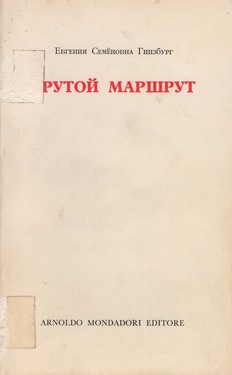
-- the autobiography of Evgenia Ginzburg, who spent 18 years in Stalin’s prison camps, has a German title Marschroute eines Lebens (Rowohlt Publishers, Reinbek; 400 pages; 20 D-Mark).
And it is not the only new publication that (apart from Svetlana’s memoirs) marks the anniversary of the October Revolution and its dreary impact. These weeks, the German book market has seen two more eye-witness accounts of the relentless and insuppressible Russian literature, for which English critics have coined this generic term: “purge literature.”
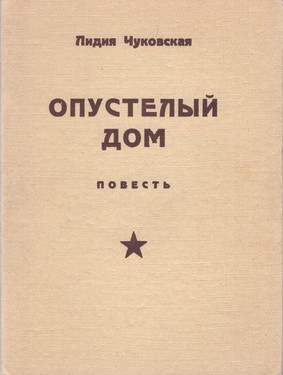
-- the novel The Deserted House by Lydia Chukovskaia (Diogenes Publishers, Zürich; 232 pages; 16,80 D-mark) and
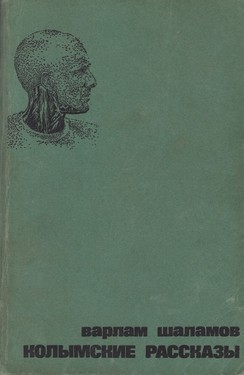
-- the experience-report Article 58 by Varlam Shalanov (Middelhauve Publishers, Opladen; around 220 pages; 16,80 D-mark)
Notes of the Prisoner Schalanow (subtitle) have not appeared in the Soviet Union so far, nor in any other country. How it reached Western Germany, the publisher Gertraud Middelhauve refused to reveal.
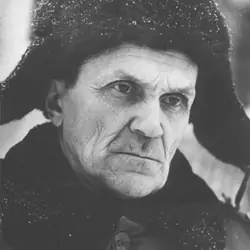
The author Schalanow, 60, who previously worked as a lawyer and today lives in Moscow, was accused in 1938 of “counter-revolutionary crimes” according to the notorious Article 58 of the Soviet criminal law. He was convicted and spent over a decade in different labor camps, where he had the worst experience in the camp Kolyma in northern Siberia.
His first book illustrates stereotypes of misery of the prisoner’s experiences in thirty brief reports: “the sunken shining eyes of Bagrezows stared in an estranged manner at Glebov’s lips – like all others, he simply did not have the power to tear his eyes away from the food that was disappearing in someone else’s mouth…”
In contrast to Schalanow, Lydia Chukovskaia, 60, described not life in the camps but the terror that preceded it. In 1966, she assailed Sholokhov, the Nobel Prize winner for Literature, for his insults directed at the fellow writers Sinyavsky and Daniel, who had been put on trial.
Her novel The Deserted House was completed in 1939 in Leningrad but was kept secret for 25 years. After this period of concealment, some unofficial copies circulated around. In 1965, the book was published by the Parisian publisher “Librairie des Cinq Continents” ‘without the knowledge’ of the author who lives in Moscow. French, English and German editions appeared at the same time in Paris, New York, London and Zürich.
The heroine of the novel, Olga Petrovna, a widow, secretary at a publishing house, and a staunch communist, undergoes mistrust and fear during the purges of 1937. Ultimately, her son, a gifted engineer and, like his mother, a believer in communism, was arrested and sent to the camps without ever coming back.
The Times Literary Supplement praised the novel to be as important as Solzhenitsyn’s One Day in Life of Ivan Denisovich: it is reminiscent of the fate of the writer Anna Akhmatova ostracized under Stalin, whose son also languished in prison. One line from her Requiem, the famous poem about Stalin’s terror, informs the title of Chukovskaia’s novel “Ein Lehres Haus” (The Empty House).”
The novel does not end hopefully. Its ending is ever more desolate, as the author refused her heroine any insight or understanding of the power that destroyed her and her son’s lives.
It is hardly because of the individual simplicity and good faith of the novel’s protagonist Olga. Likewise, high-ranking party members no longer understood what was going on in 1937, as the memoir of Evgenia Ginzburg, Marschroute eines Lebens, reveals. In 1967, Mondadori Publishers in Milan first published it in Russian, followed by an Italian translation; the author, who lives in Moscow, fell out of favor with the Soviet government.
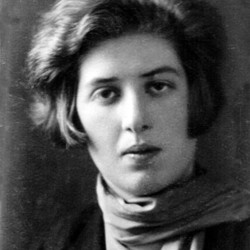
Ginzburg, the mother of the writer Vasily Aksenov, was accused for alleged critical activities in 1937 and sentenced to 10 years of solitary confinement through an investigation that lasted only a couple of minutes. Later, she was “pardoned,” and her imprisonment was commuted for a new form: forced labor in Kolyma. She was a journalist, teacher, member of the party, and wife of a high-ranking official in Kazan.
Despite her privileged position, it proved impossible for her, a loyal communist, to make sense of Stalin’s purges. Her book, the most important of the three new works of purge literature, describes how the Party conviction and branding of those condemned for Menshevism, Trotskyism, strong leftist or rightist deviants, has a continuous influence on victims. Prisoners in the camps often practiced similar ways of thinking they had themselves fallen victim to.
Like Lydia Chukovskaia’s heroine Olga Petrovna, Ginzburg was unable to grasp the meaning of the millions of deaths. Instead, she accused Stalin and his closest circle, but not Soviet communism (and in this sense, she is similar to Olga).
“Even now, after everything that had happened,” the author recalled later, “we would have never chosen an alternative system to that of the Soviet Union.”