Coglie un profondo disagio nello scrivere dei due autori russi Andrej Sinjavskij e Yuri Daniel, processati in questi giorni a Mosca. Molto probabilmente li attende la prigione, il lavoro forzato in Siberia. Si è sempre discusso, anche troppo, di letteratura e vita, delle esclusioni e delle identità del problema. Ora, siamo di fronte alla prova violenta di come la letteratura, la libertà d’espressione, la facoltà di vestire di parole le proprie convinzioni e le proprie fantasie, si possano scontare con la perdita della libertà, il rischio della vita stessa.
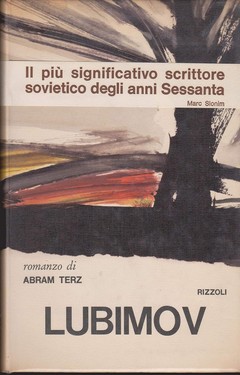
Alcune opere di Daniel e di Sinjavskij sono state pubblicate in Occidente, con «noms de plume» rispettivamente di Nikolaj Arzak e di Abram Terz, Di Abram Terz in particolare, sono state pubblicate in Italia, dall’editore Rizzoli, le traduzioni di due romanzi: «La gelata», nel 1962, e «Ljubimov», nell’estate dell’anno scorso. Il primo testo di Sinjavskij-Terz era arrivato a Parigi, per vie segrete, nel 1960: s’intitolava «Si fa il processo», ed assume un risalto strano, oggi che l’autore è sotto accusa a Mosca.
Sinjavskij ha appena varcato la quarantina; figlio di un aristocratico che, nel ’18, divenne capo di un governo antibolscevico sul Volga, porta una barba estrosa, capelli spiritati. Ha lo sguardo irrequieto, anche perché gli occhi sono strabici; ama il folklore russo, e gli piace cantare in compagnia. Uno dei ritornelli preferiti, favoleggia di uno scapestrato malandrino di Odessa, d’estrazione ebraica Abramo Terz, appunto. «La gelata» si compone di tre racconti, in cui la vena grottesca lotta contro la descrizione realistica, la mania delle pianificazioni urta contro le esigenze più dimesse della vita.
«Lubimov» racconta gli eventi della città omonima «più antica di Mosca stessa, che non diventò un grande centro soltanto per sbaglio». A Lubimov comanda il dittatore-mago Lionia Tihomirov, che sa trasformare, per amore del popolo, le vivande più comuni in piatti sopraffini, le acque del fiume in «champagne», lo squallido paesaggio in un Eldorado. Terz è uno scrittore ricco di umori corrosivi e di invenzione; ma dietro il gioco fantasmagorico non è difficile scoprire un cifrario che introduce nel suo vero mondo, brulicante di malizie e di irriverenze.
Per gentile concessione dell’editore Rizzoli, riportiamo alcune pagine fra le più imbarazzanti, certo, per una gerarchia culturalistica che soprattutto non sopporta la ironia e lo scherzo: quelle in cui il vecchio Saveli, rivolgendosi al «grande filantropo, teosofo, un vero Diogene e parzialmente bibliomane», Samson Samsonovič Proferansov, riferisce le confidenze di un cechista: Lenin ululava alla luna. Uno scherzo, si diceva; ma le dittature, soprattutto gli zelanti nipoti dei dittatori, non gradiscono l'humour.
There is a profound unease in the writings of the two Russian authors Andrei Sinyavsky and Yuri Daniel, who are currently on trial in Moscow. Most likely, they face prison and forced labor in Siberia. There has always been much discussion, perhaps too much, about literature and life, about exclusion and the identities involved in the problem. Now, we witness the violent evidence of how literature, freedom of expression, and the ability to clothe one's convictions and fantasies in words can be punished with the loss of freedom and the risk of one's very life.
Some of Daniel and Sinyavsky's works have been published in the West under the pseudonyms Nikolai Arzhak and Abram Tertz, respectively. Two novels by Abram Tertz in particular have been published in Italy by Rizzoli: La gelata (The Icicle) in 1962 and Liubimov in the summer of last year. Sinyavsky-Tertz's first manuscript arrived in Paris via secret channels in 1960. It was entitled The Trial Begins and takes on a strange significance today, now that the author is on trial in Moscow.
Sinyavsky has just turned forty; the son of an aristocrat who, in 1918, became head of an anti-Bolshevik government on the Volga, he sports a whimsical beard and wild hair. He has a restless gaze, partly because his eyes are crossed; he loves Russian folklore and enjoys singing in company. One of his favorite refrains tells the tale of a reckless rogue from Odessa, Abram Tertz, who was of Jewish descent. The Icicle consists of three stories in which the grotesque struggles against realistic description, and the mania for planning clashes with the more modest demands of life.
Liubimov recounts the events of a city, "older than Moscow itself, which only by mistake did not become a major center". Liubimov is ruled by the dictator-magician Lionia Tikhomirov, who, for the love of the people, knows how to transform the most common foods into exquisite dishes, the waters of the river into “champagne,” and the squalid landscape into an Eldorado. Tertz is a writer rich in caustic humor and invention, but behind the phantasmagorical device, it is not difficult to discover a code that introduces us to his real world, teeming with malice and irreverence.
Courtesy of the publisher Rizzoli, we reproduce some of the most embarrassing pages, certainly for a cultural hierarchy that cannot stand irony and jokes: those in which old Saveli, addressing the "great philanthropist, theosophist, a true Diogenes and partial bibliomaniac", Samson Samsonovich Proferansov, recounts the confidences of a Chekist: Lenin howled at the moon. A joke, it was said; but dictatorships, especially the zealous grandchildren of dictators, do not appreciate humor.