Information
[Preface] // Maria Galina. Communiqués. New York: Cicada Press, 2024. pp. 13-15.
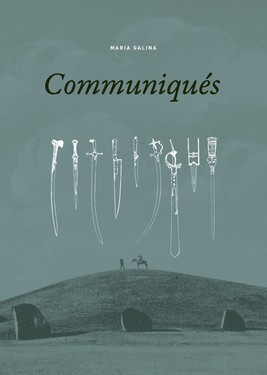
[Preface] // Maria Galina. Communiqués. New York: Cicada Press, 2024. pp. 13-15.
He looks out the window, above the roofs something
Like a blaze, like nothing found in nature,
A low sky of heavy and greasy
Steam from the cooling towers or not from the towers [...]
The poems in Communiques, suffused with a sense of foreboding, share the precise attention to beautiful complexity and the wry humor that characterizes all of her work. There is a steely under- tone to many of them that seems sharply appropriate to the grim preparations for war, but this tone can also be found in other work by Galina written in what might have seemed like a more peaceful time. Reading these poems now, which take us from imaginary medieval cities to the beaches of yesterday afternoon, one cannot avoid the creeping suspicion: how peaceful was the peace that seemed to reign before?
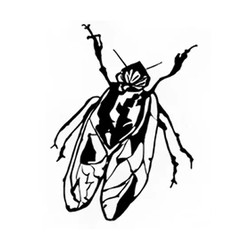
In partial response to this question, this book opens with a poem written eight years ago, "The radios playing..." (not included in the manuscript No. 7 on which this book is otherwise based). This is, though, another poem that conjures the banality and madness of a war then just getting started, stunningly captured in the final image of "grasshoppers in the withered grass [...] marching in formation // Morphing, along the way, into something completely different." The translators (a team of students studying Galina's work) asked Galina to explain this line: "apparently, when grasshoppers assemble in very large numbers, they undergo a mutation and transform into a different species, namely, into ravaging, crop-destroying locusts."*
As Anna writes, "What drew me to Maria Galina's poetry was a certain parallel-she was trained as a biologist, my father was a biologist, and I studied psychology." Galina is a scientific thinker as much as a poetic one. Her poetic universe is made up of separate worlds that include people, animals and other fantastic creatures; it spans real and imaginary centuries. This is not a vision focused on the poet's ego, feelings, and personal drama, but a natural scientist's view of the world in its complexity, intensity, cruelty, and compassion towards others. As the French explorer-narrator of the "Communiqués" cycle notes of the local fauna:
it was amusing to watch them fussing about
running around, grabbing their young and supplies,
family jewels, books, photographs and documents
The loaded reference to a monstrous mutation in the "radio" poem is likewise no throwaway factoid. War is woven into the fabric of these poems, but the life that interests Galina transcends such two-dimensionality. True, as she wrote in a journal entry on June 26, 2022—the day after the latest bombing of Kyiv (in Ukrainian):
War pushes one toward pathos. I've never been fond of weighty words, but it can be very difficult to hold back, and maybe better not to. War makes everything black and white, this is also a completely natural phenomenon. The world is variegated, made up of many different colors, but that's for later. The world is complicated, but right now everything is very simple.
Still, the stuff of Galina's poetry adheres to this "later": always complex and multifaceted, made up of "colorful threads [that are] tangled, too long" —far outstripping the uniform khaki of identi- cal military dress. The scope and pacing of her worlds incorporate war as one of the things that humans do, but hardly the best or most interesting thing; a typical refrain from her wartime journal is exasperation: "I, a generally rational person, am still flabbergasted by the horrifying absurdism of this senseless and irrational undertaking." This is why we need Galina: to show us the myriad worlds out there, each full of curious and strange, sad and breathtaking phenomena, all of them crucial, all filled with sense-" and this is how we will prevail" [tak peremozhemo].
*Anna first encountered Maria's writing when she was editing an anthology of
Russian poetry in translation for The Cafe Review, and translated a few of her
poems then. Ainsley worked with Maria on poems for the anthology Verses on the
Vanguard (Deep Vellum, 2021).